Last Updated:
Stoop repair in Newark, NJ starts with a question most quick fixes skip: why did the steps loosen in the first place? True Course Masonry Newark repairs and rebuilds brick, stone and brownstone stoops and steps across Newark and Essex County, from a single loose tread to a full rowhouse stoop with cheek walls and a railing. The work is carried out by licensed and insured contractors, and the business takes masonry jobs of every size, including one cracked step. A stoop is a small structure with a hard life. It stands apart from the house on its own base, takes rain on every flat surface, gets salted all winter and carries everyone who comes to the door. When the base, the joints or the treads give way, the right repair depends on which one failed first. If you want a sense of budget before anything else, the stoop repair cost guide explains what moves the price.
What happens on the first visit
A first look at a stoop is about whether it is still sitting where it was built. Loose mortar on a level, square stoop is a pointing job; the same mortar on a stoop that has tipped is a symptom. The visit checks:
- Level and square. Whether treads pitch slightly away from the house as they should, sit flat, or tilt back toward the door, and whether the stoop has rotated or dropped at one corner.
- The joint at the house. A gap opening between the stoop and the front wall, or a crack running up the house wall from the top step.
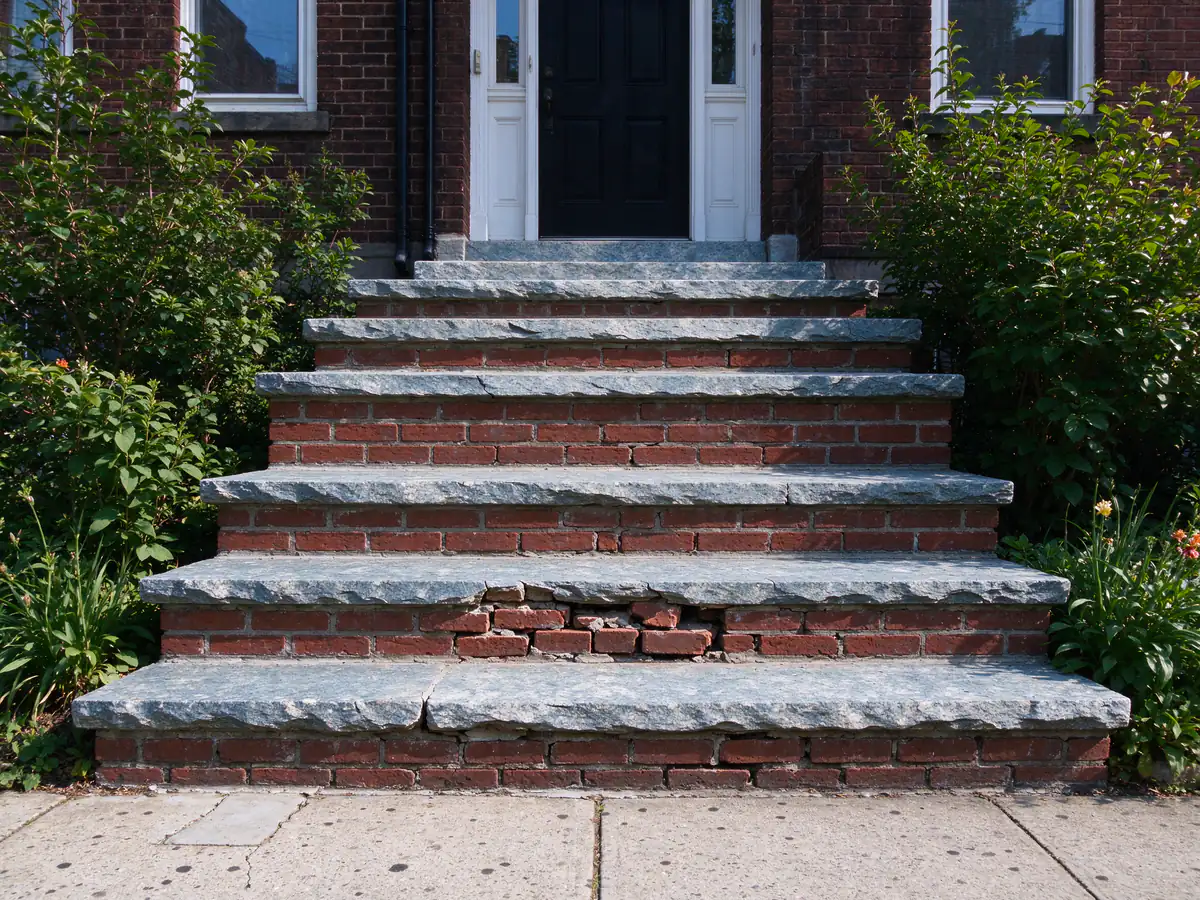
- Treads and caps. Rocking or lifted treads, brick faces that have popped off, brownstone that is peeling in layers and caps with open joints.
- Cheek walls and risers. Bulging side walls, missing brick and cracks that run through units rather than along the mortar.
- Earlier repairs. Cement skims over treads, hard gray mortar in old joints and patches around railing posts.
- Water and salt. Where downspouts discharge, whether a leader dumps onto the steps, and how the treads drain after rain.
- The railing. Whether posts are loose because the anchor pocket has cracked or because the railing itself is damaged.
- Access to the house. Whether there is another entrance while the steps are out of use.
Please do not stand on a tread that rocks or lift loose stone yourself. If you are not sure whether what you see is movement or wear, the masonry damage assessment can help you describe it before anyone visits.
Why stoops settle and come apart
Most stoop failures trace back to three things working together: the base the stoop stands on, water getting inside it and winter salt.
The footing and base. A stoop is a separate mass of masonry sitting in front of the house wall, and it is often not tied into the house foundation. What sits under it varies with age and who built it. Some stoops rest on a masonry or concrete footing taken below the frost line; others sit on rubble fill, a shallow pad or soil that was never compacted. A base that is too shallow lets frost lift and drop the stoop each winter, and fill that washes out or settles lets one side sink. The result is a stoop that leans out, drops at the front corners or pulls away from the house, often with a crack that follows the line where the two meet. Repointing a stoop in that state fills the joints for a season and then they crack again, because the stoop is still moving. Where a stoop has sunk because its base failed, the base is corrected as part of a rebuild. Settlement of the house itself is a different matter and belongs with a foundation specialist; the guide on when a masonry crack needs an engineer explains where that line falls.
Water inside the stoop. Treads are flat, so every joint on top of a stoop takes standing water. Once a tread joint opens, rain runs into the core of the stoop and stays there. NOAA’s 1991 to 2020 climate normals for Newark Liberty International Airport show about 80 nights a year at or below freezing, and roughly 65 of those days rise back above freezing in the afternoon, a rough proxy for days that cross 32 degrees F rather than a counted cycle. Water that soaks into a stoop and freezes expands, which pushes treads up, opens joints wider and pops brick faces. A downspout that empties onto the bottom step or a tread pitched back toward the door makes all of it faster.
Deicing salt. The New Jersey Department of Transportation reported spreading 238,480 tons of salt on state highways in winter 2021 to 2022 and 390,579 tons in 2017 to 2018. Those are statewide road figures, not a count of what goes on Newark sidewalks, but they show how much salt moves through the region in a hard winter. Salt that melts ice on a step becomes brine that soaks into brick, brownstone and mortar. As it dries, the salt crystallizes inside the pores and pushes the surface apart, and brine also refreezes. Stoop treads and the bottom courses of cheek walls usually show this first. The guide to why brick spalls explains the mechanism in more detail.
Repoint, reset or rebuild
The choice comes down to whether the stoop is sound underneath and still in place.
Repoint. When the stoop is level, square and tight to the house, and the damage is open or crumbling joints with a few bad units, repointing is the right repair. Failed mortar is cut back to sound material and replaced with a mix suited to the brick or stone, the same way a wall is handled on the brick pointing page. Single damaged bricks can be cut out and replaced as part of the job; see brick repair and replacement.
Reset. Loose treads and caps on an otherwise sound stoop can be lifted, the bed cleaned to sound material, and the units relaid on fresh mortar with a slight pitch to shed water. This is common on stone and brownstone treads, where the stone is fine but its bed has washed out.
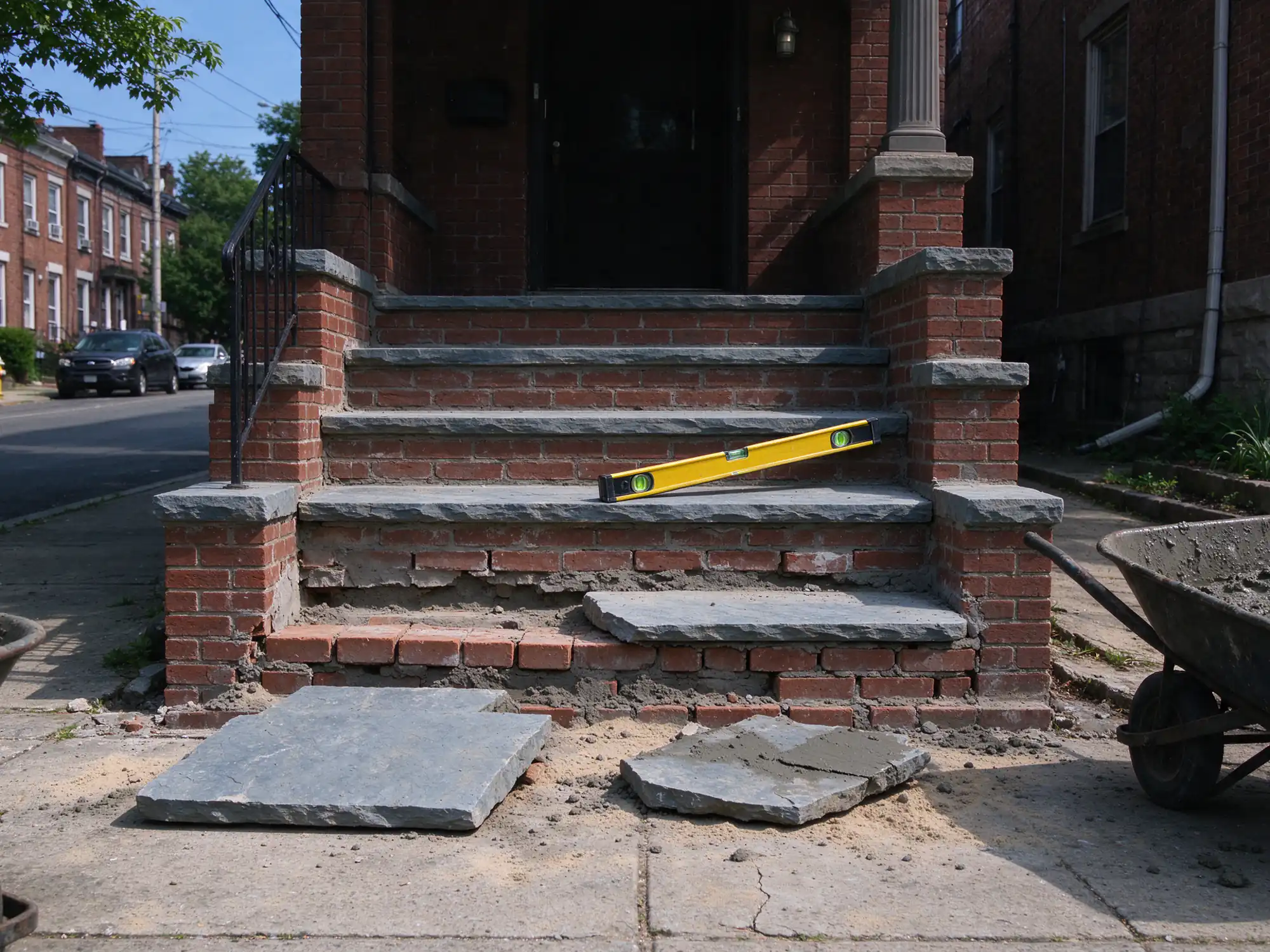
Rebuild. When the stoop has rotated, sunk or split, when the cheek walls are bulging, or when most of the units are too damaged to keep, a rebuild is usually the sound option. The stoop is documented, taken down, the base is corrected and the steps are laid again, reusing sound brick or stone where it comes out whole. Homeowners report being offered an inexpensive cement overlay over a crumbling stoop as an alternative to rebuilding. An overlay bonds to the surface it covers; if that surface is already loose, wet and salt-damaged, the new layer has nothing sound to hold, and it can crack or peel away while the stoop underneath keeps deteriorating. The comparison table on this page lays out the trade-off, and the illustrative walkthrough of a stoop rebuild from start to finish shows the order of work.
Brownstone stoops. Newark brownstone is a layered red-brown sandstone of the Passaic Formation, quarried locally from about 1700, according to the Newark Public Library. Brownstone treads and newel caps often peel in sheets where water gets between the layers. Repair options include patching mortar built up in layers, a dutchman insert, or replacement with a matched or salvaged sandstone. The brownstone repair and matching guide and the stone and brownstone masonry repair page cover those routes.
Railings. A railing post that wobbles is often a masonry problem: the post was set in a pocket of mortar or lead, water got in around it, and the steel rusted and expanded, cracking the brick or stone around the anchor. Resetting the post in sound masonry belongs in the stoop scope. Repairing or replacing the railing itself is metalwork, which may need a separate fabricator.
Permits, historic districts and access
New Jersey’s Uniform Construction Code treats a stoop differently depending on how much of it is being replaced. Under N.J.A.C. 5:23-2.7(c)1.xiii, repair or replacement of any part of a stoop that does not support a roof, using identical or closely similar materials in the same location, is ordinary maintenance, which needs no permit or notice. Total replacement of a stoop that does not structurally support a roof or building is minor work under N.J.A.C. 5:23-2.17A: the construction office is notified before work starts, a permit application follows within five business days, and the work is inspected. A stoop that carries a porch roof falls outside both of those provisions. The Newark construction office makes the final call, and the masonry permits in Newark guide covers what to ask.
Historic status is a separate layer. Under Newark’s Landmarks and Historic Preservation regulations (Chapter 41:10), work in a historic district or on a landmark can need a Certificate of Appropriateness from the Landmarks and Historic Preservation Commission, or a Certificate of No Effect from the Historic Preservation Officer. A stoop is usually the most visible masonry on a street-facing front, so in districts such as Forest Hill, James Street Commons or North Broad Street, plan for the question before materials are ordered. Which masonry repairs are exempt from that review has not been confirmed.
Access shapes the job too. A stoop is often the only way into the house, so a rebuild needs a plan for temporary steps or another entrance. Where the bottom step meets a public sidewalk, keeping pedestrians clear of the work matters, and on close-set blocks like parts of the Ironbound there may be little room to stage material.
Concrete steps and other work not offered
This page covers masonry stoops: brick, stone and brownstone laid in mortar. Poured concrete steps, concrete landings, slabs and walkways are concrete work, which is a separate trade and not offered here. The guide on masonry vs concrete contractors explains how to tell which one a project needs. Where a brick or stone stoop sits on a concrete footing, the masonry scope covers what is laid on top of it.
What drives the cost of a stoop repair
Published cost data for brick and stone stoop work is too thin to quote a dependable range, and brownstone stoops are not covered by the national guides at all, so a Newark price comes from a site visit. What moves it:
- whether the job is repointing, resetting treads or a full rebuild
- the number of steps, the size of the landing and the height of the cheek walls
- how much of the stoop has to come down, and disposal of what is removed
- whether the base under the stoop needs correcting
- matching brick, sourcing replacement or salvaged brownstone, and any patching or dutchman work
- railing removal and resetting, and coordination with a fabricator
- historic review, permits and inspection where they apply
- protection for the house front and sidewalk, and temporary access to the door
The masonry cost estimator gives a rough range for related brick work, and the masonry repair services page covers repairs elsewhere on the house. The list below shows what a stoop scope from True Course Masonry Newark covers.
What's included
- A look at the treads, risers, cheek walls, joints and the base the stoop sits on before a repair is priced
- A written scope that says whether the stoop is repointed, partly reset or taken down and rebuilt, and why
- A plan for safe entry to the house while the steps are out of service
- Removal of loose units and failed mortar to sound material, with dust control during cutting
- Treads, caps and brick reset or replaced with matched units and a mortar suited to them
- Railing anchor pockets cleaned and reset in sound masonry where the railing stays
- Curing protection, cleanup of residue and a final walk up and down the finished steps
Repointing, a surface overlay and a rebuild for a worn stoop
| Repoint and reset | Cement overlay or skim coat | Take down and rebuild | |
|---|---|---|---|
| What it does | Replaces failed mortar and resets loose treads or caps on a stoop that still sits level and square | Covers worn treads and risers with a new cement layer over the old masonry | Removes the stoop to its base, corrects the base and lays the steps again |
| When it fits | Joints and a few units have failed, but the stoop has not tipped, sunk or pulled away from the house | Rarely a lasting answer on brick or brownstone; only where the masonry under it is sound and dry | The stoop has rotated, sunk or split, the base has failed, or most units are too damaged to keep |
| What it will not do | Will not correct a stoop that is settling because its base has failed | Will not stop water already inside the stoop and can hide the damage while it grows | Will not last if the water and salt that wrecked the first stoop are not handled |
| Effect on the stoop | Keeps original brick or stone and its look | Changes the look, and a dense layer can trap moisture and salts underneath, so it may delaminate | New work can reuse sound original units where they come out intact |
Related resources
- Cost GuideHow Much Does Stoop Repair Cost in NJ?
- LearnHow Is Brownstone Repaired and Matched?
- Decision GuideDo You Need a Permit for Masonry Work in Newark, NJ?
Representative photos of this work
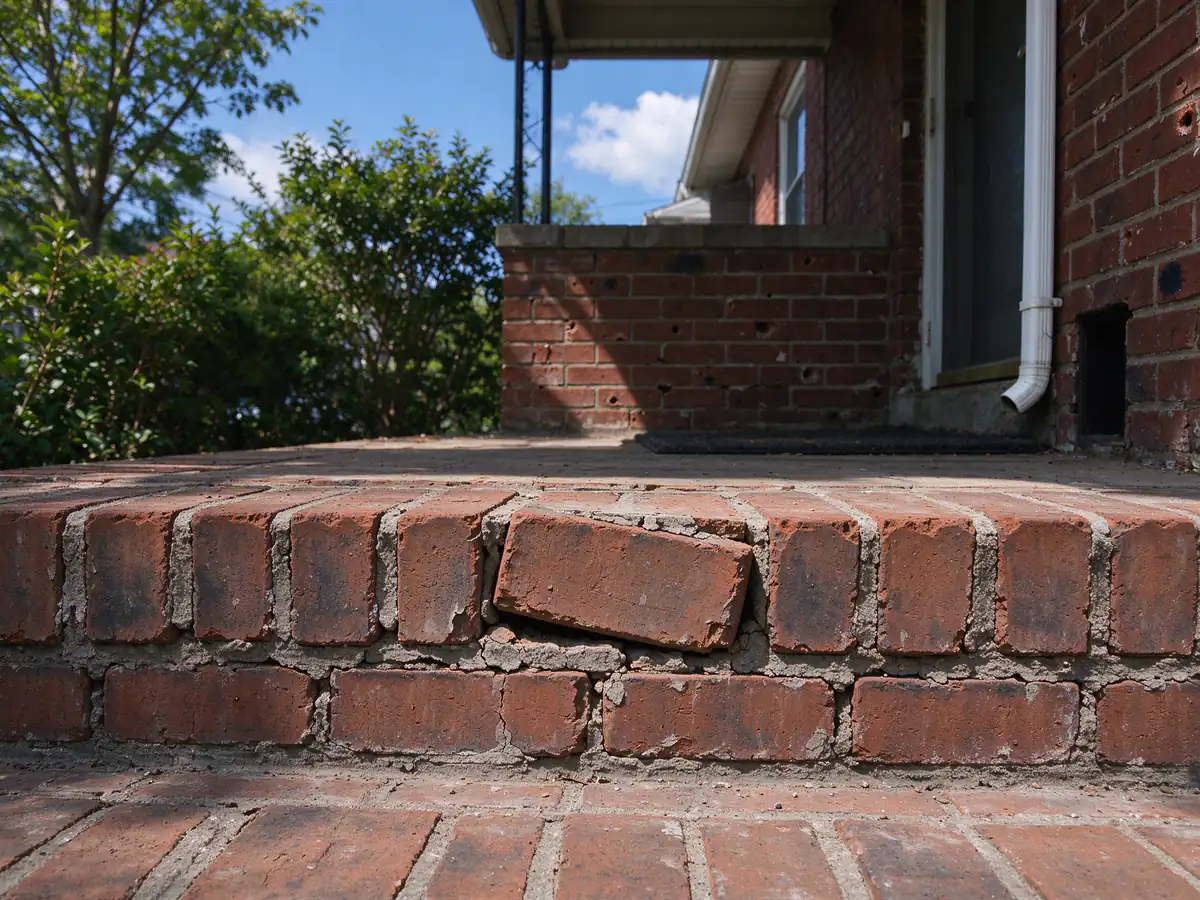
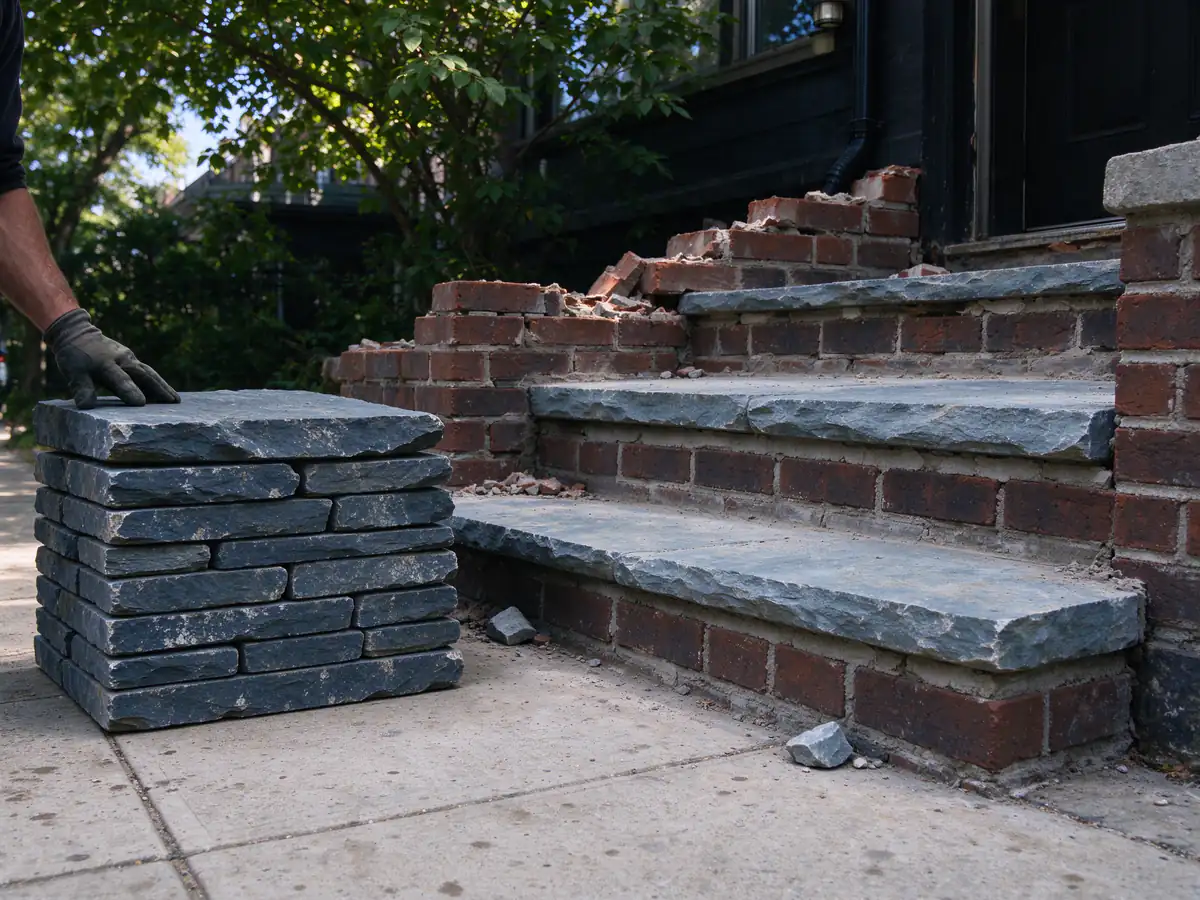
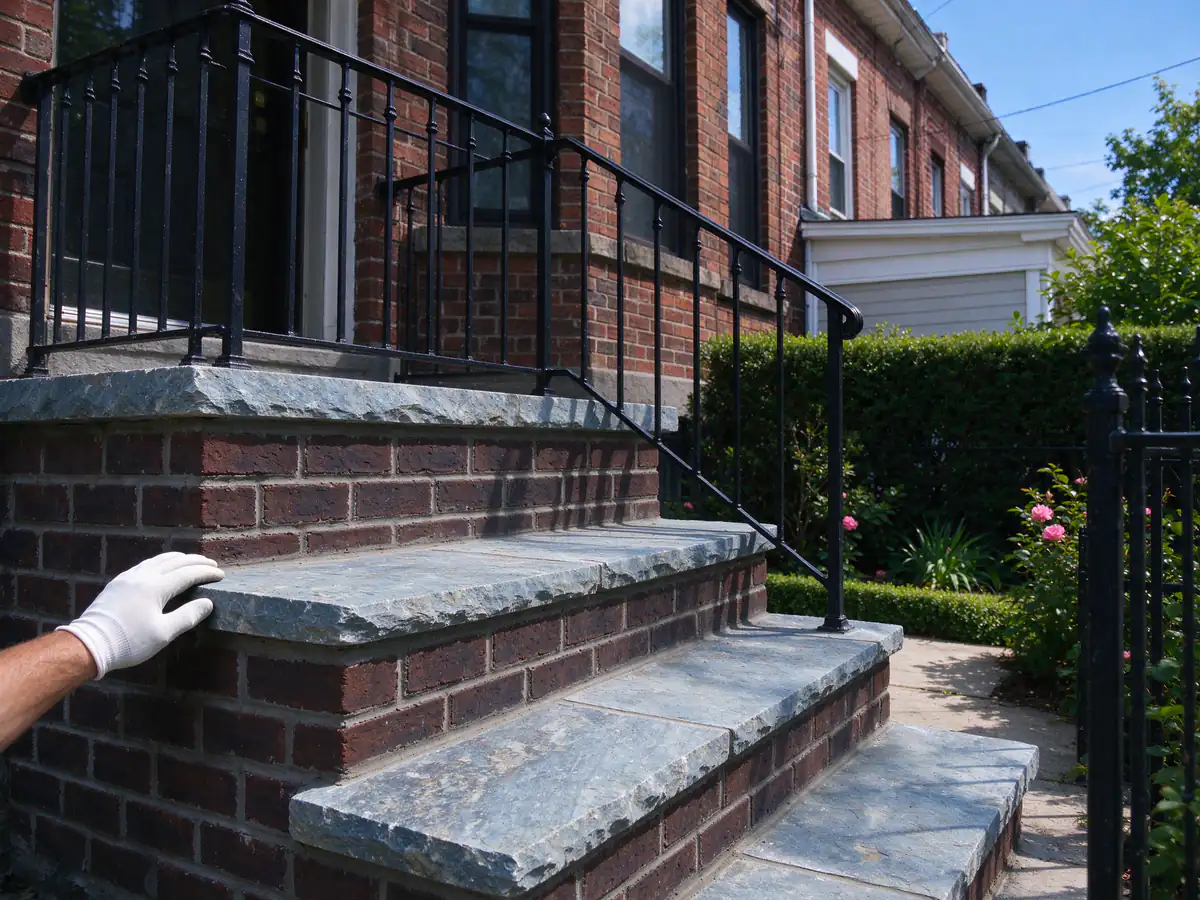
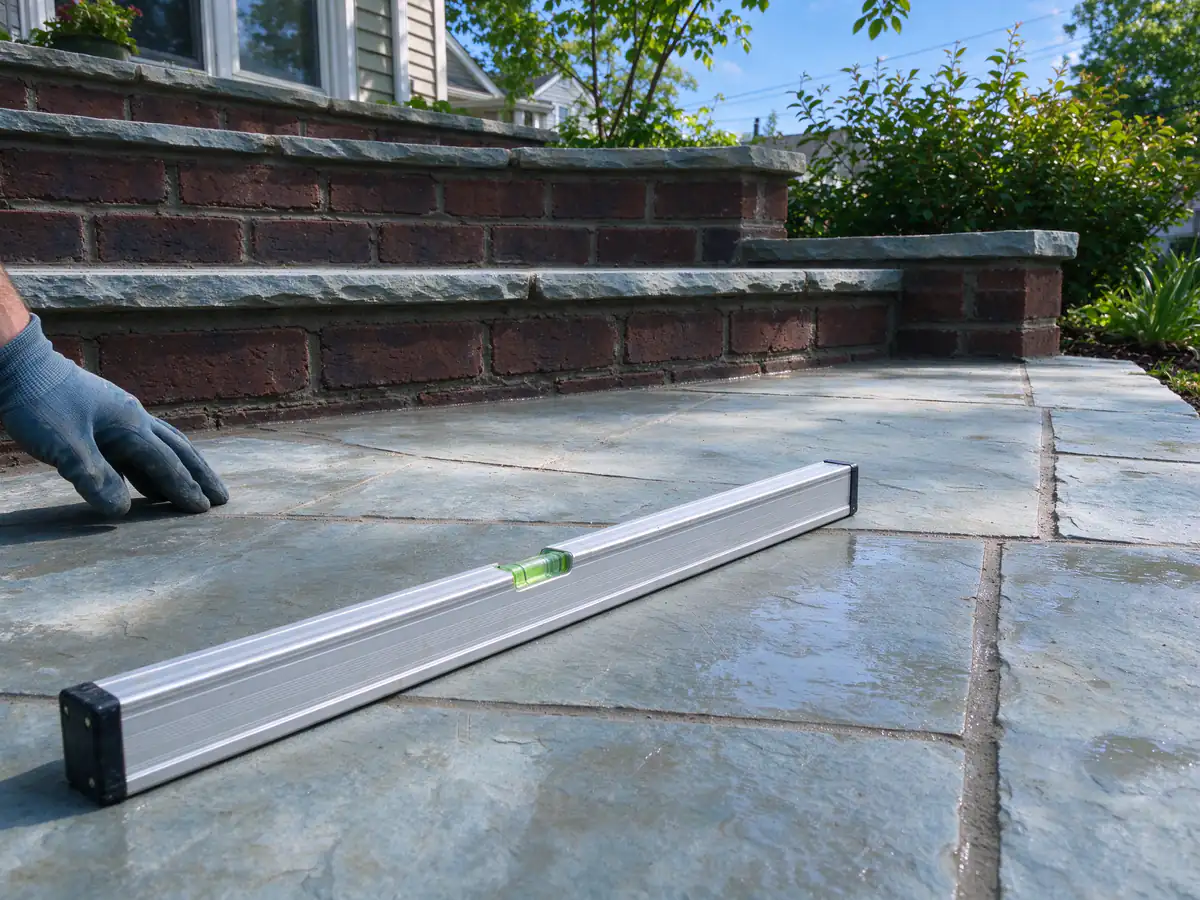
Representative photos of this type of work, not photos of specific completed jobs.
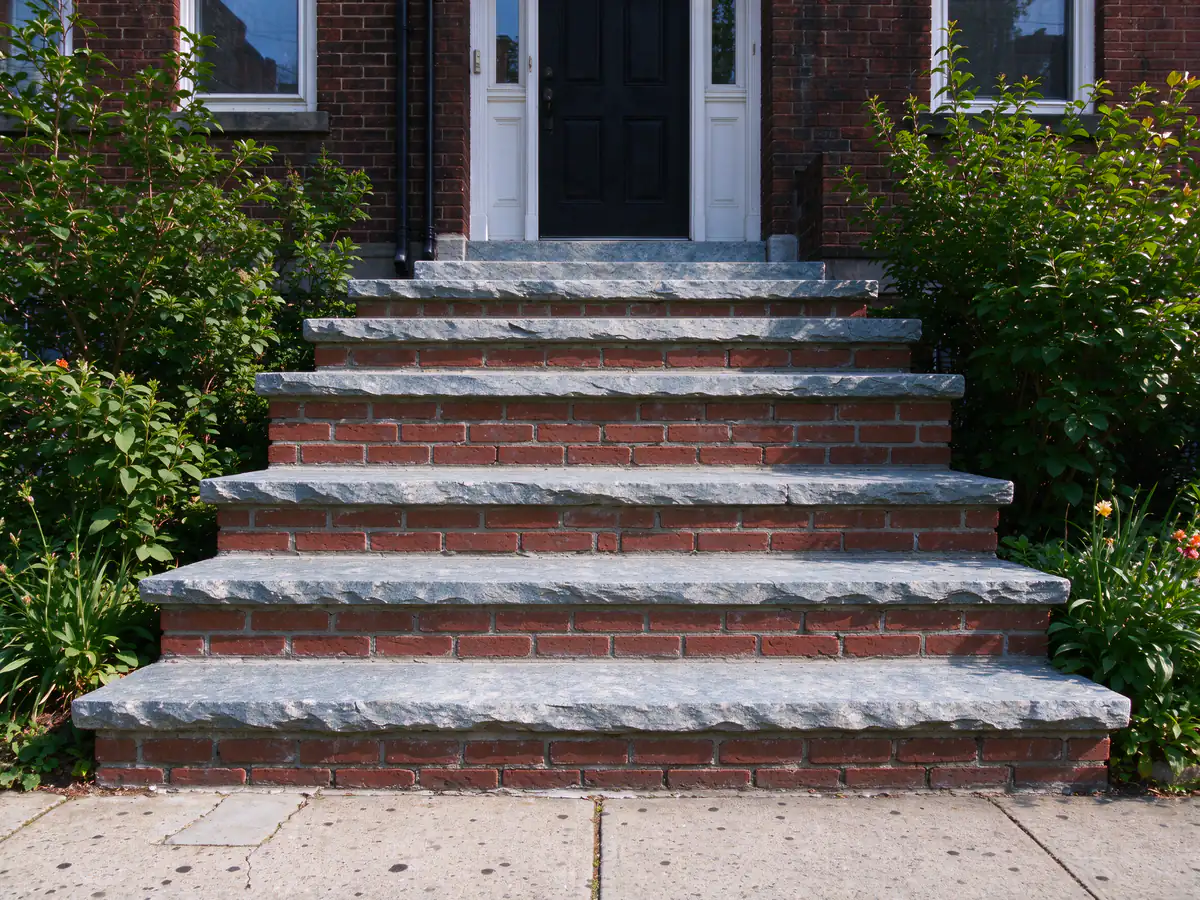
Before and after (representative)