Mortar is washing out of the joints
Sand on the windowsills, joints you can scrape with a key, or mortar set back a quarter inch or more from the brick face. Water is getting into the wall through those gaps, and each freeze widens them.

True Course Masonry Newark points, repairs and rebuilds brick, brownstone, stone and block across Newark and Essex County. Small jobs are welcome, down to a handful of loose bricks, and the typical cost of the common jobs is published below before you ever pick up the phone.
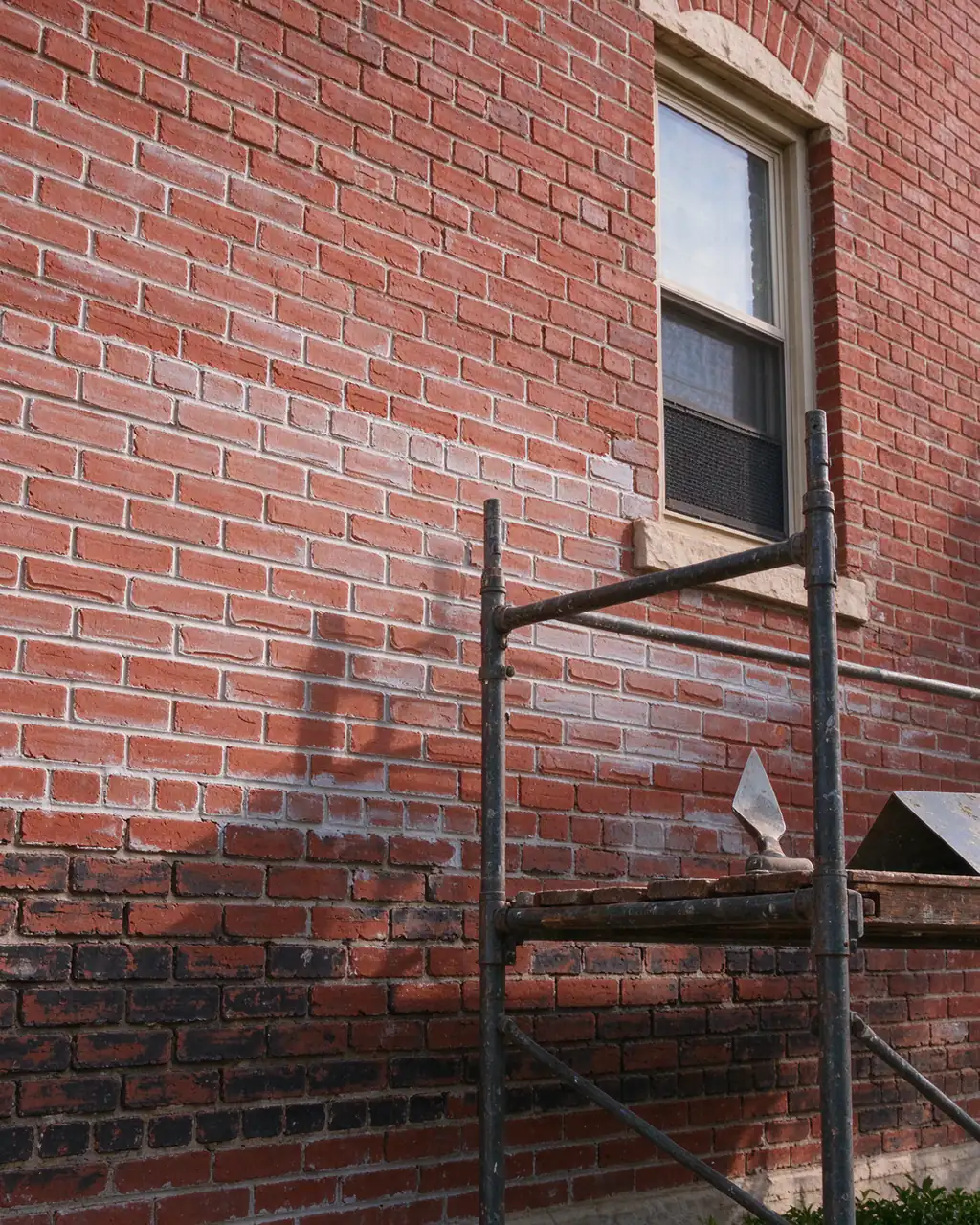
A course is one row of brick. True means straight, level and plumb with the row below it. The name is the standard.
80
nights a year at or below freezing at Newark Liberty, the cycle that loosens wet mortar and pops brick faces
NOAA 1991-2020 climate normals
1 in 4
Newark homes were built before 1940. Older brick and brownstone is usually softer than modern cement mortar, which changes how it should be repaired
U.S. Census ACS 2020-2024
Permit
Repair work in New Jersey needs a construction permit unless the code lists it as ordinary maintenance
N.J.A.C. 5:23-2.7 and 2.14
$500
Home improvement contracts above this amount must be in writing in New Jersey, with a three-day right to cancel
N.J.S.A. 56:8-136 et seq.
Sand on the windowsills, joints you can scrape with a key, or mortar set back a quarter inch or more from the brick face. Water is getting into the wall through those gaps, and each freeze widens them.
Locals call them blown bricks. A saturated brick that freezes, salts crystallizing under the surface, or a hard cement repair that pushed water into the brick can all strip the face. The cause decides whether replacing the brick is enough.
Steel lintels rust, and rust takes up more room than steel, so it lifts the brick above the opening. A crack that steps up from a window corner is a reason to look at the lintel, not just fill the joint.
Loose bricks at the top of a chimney, a cracked crown, or stoop treads that rock underfoot. Chimney tops and stoops take the most weather of any masonry on a house, and both can drop material on people below.
Every service below is the same craft applied to a different part of the building. Most calls start with one of the four on the right.
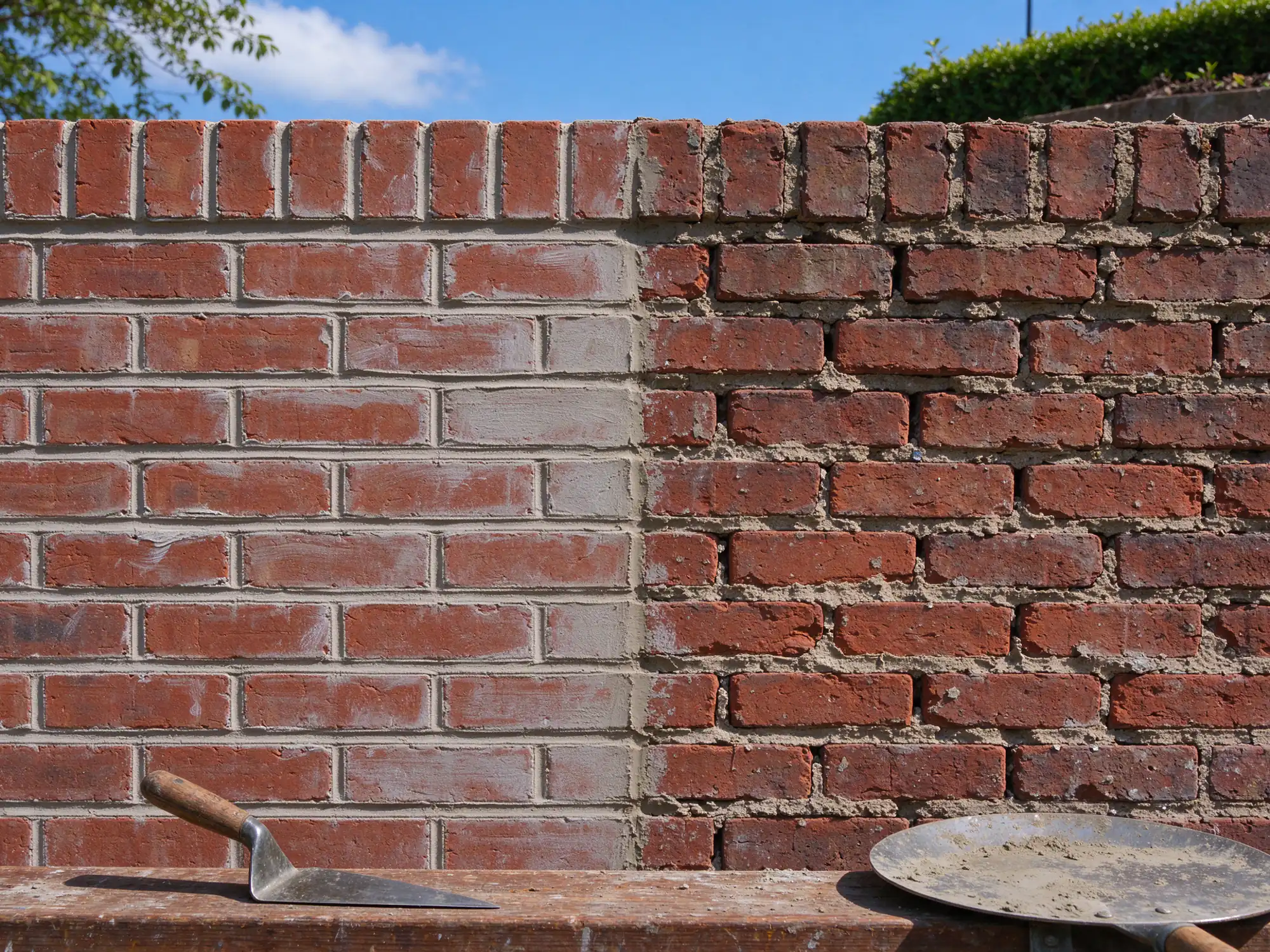 Brick Pointing
Failed mortar cut back to sound material and replaced with a mix chosen for the wall, then tooled to match the old joints.
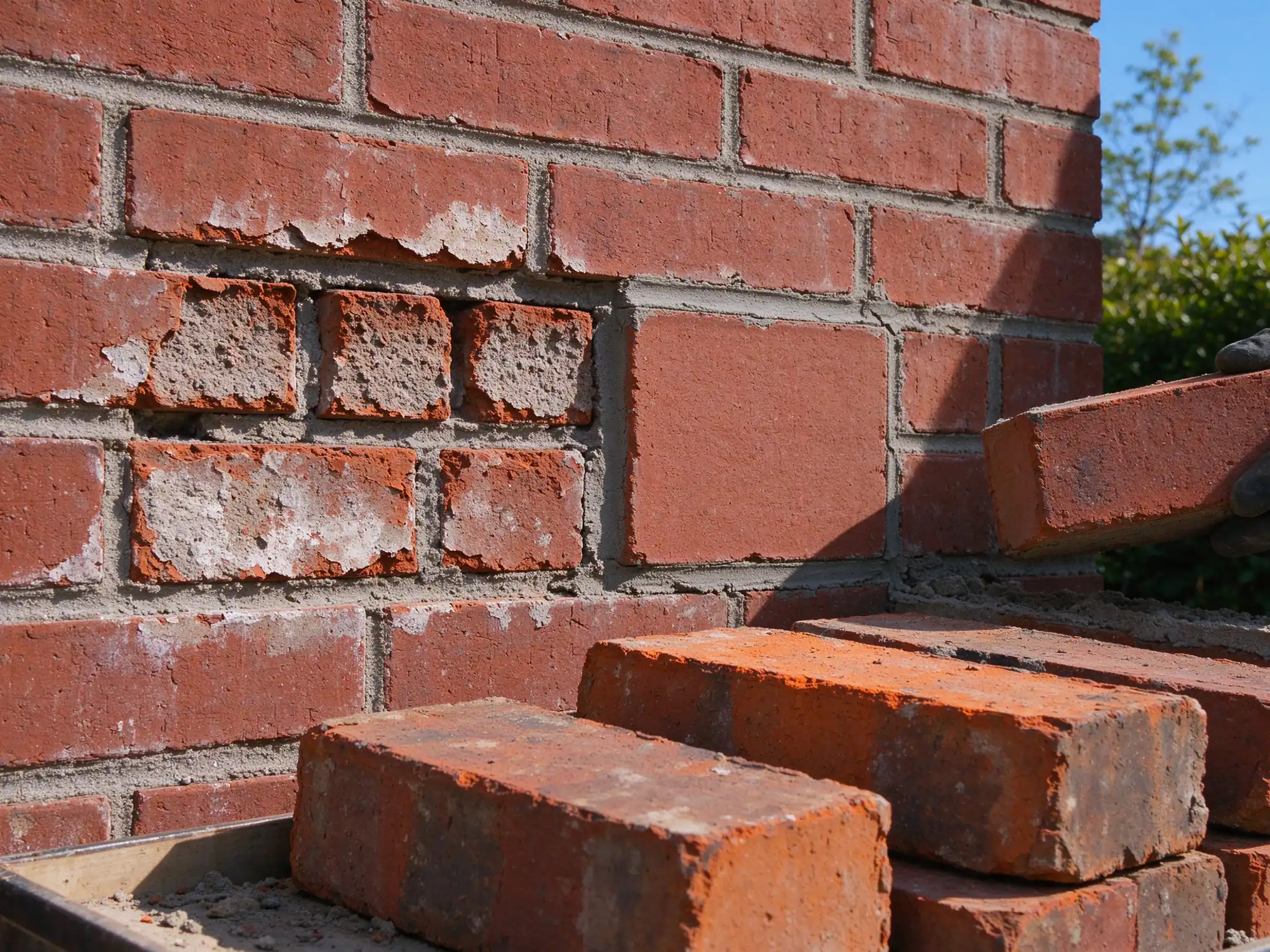 Brick Repair
Blown, cracked and loose brick replaced or reset, matched for size, color and texture, with the cause dealt with first.
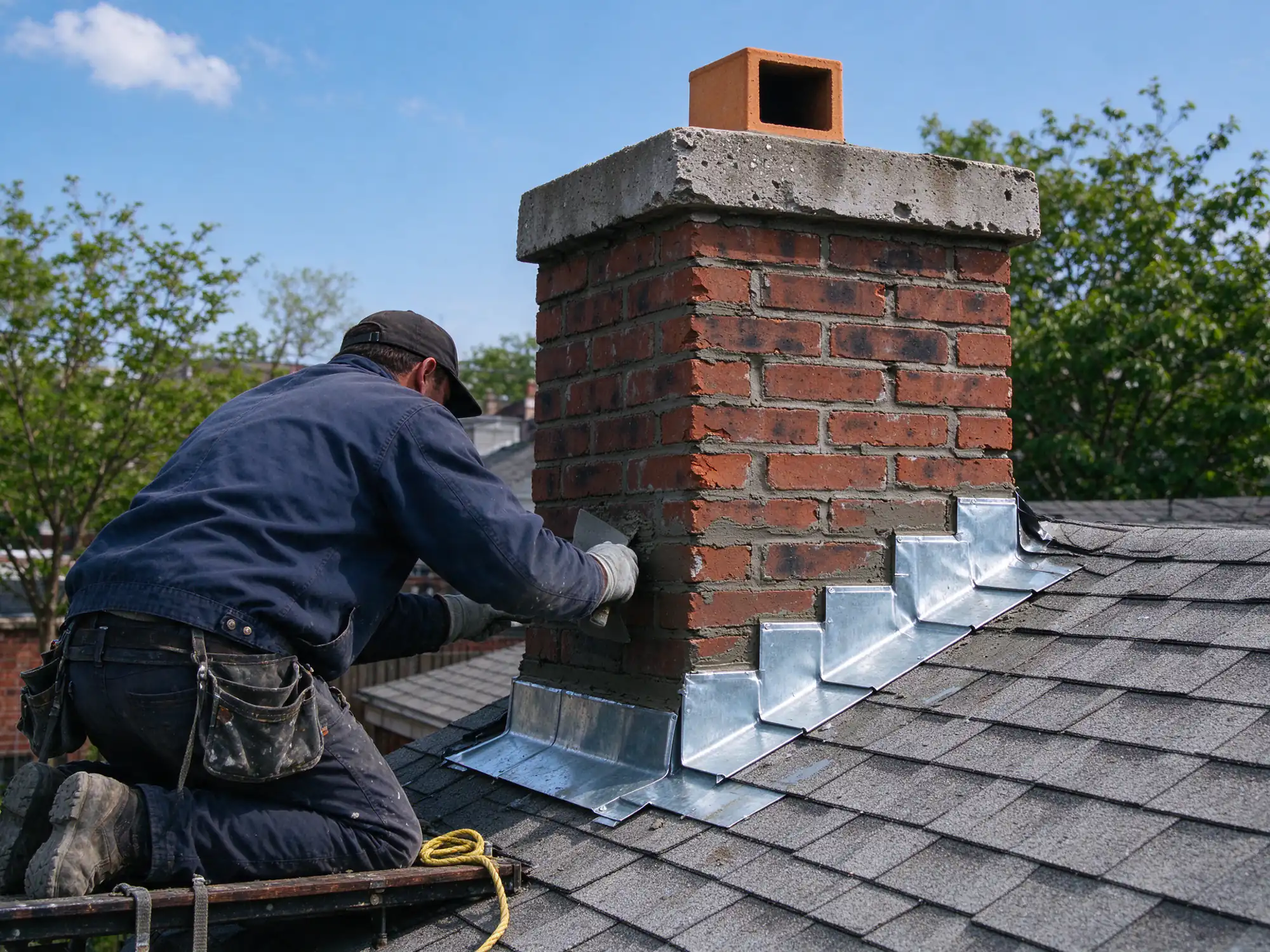 Chimney Repair
Repointing, crown repair and partial or full chimney rebuilds. Masonry only: flue cleaning and liners are a separate trade.
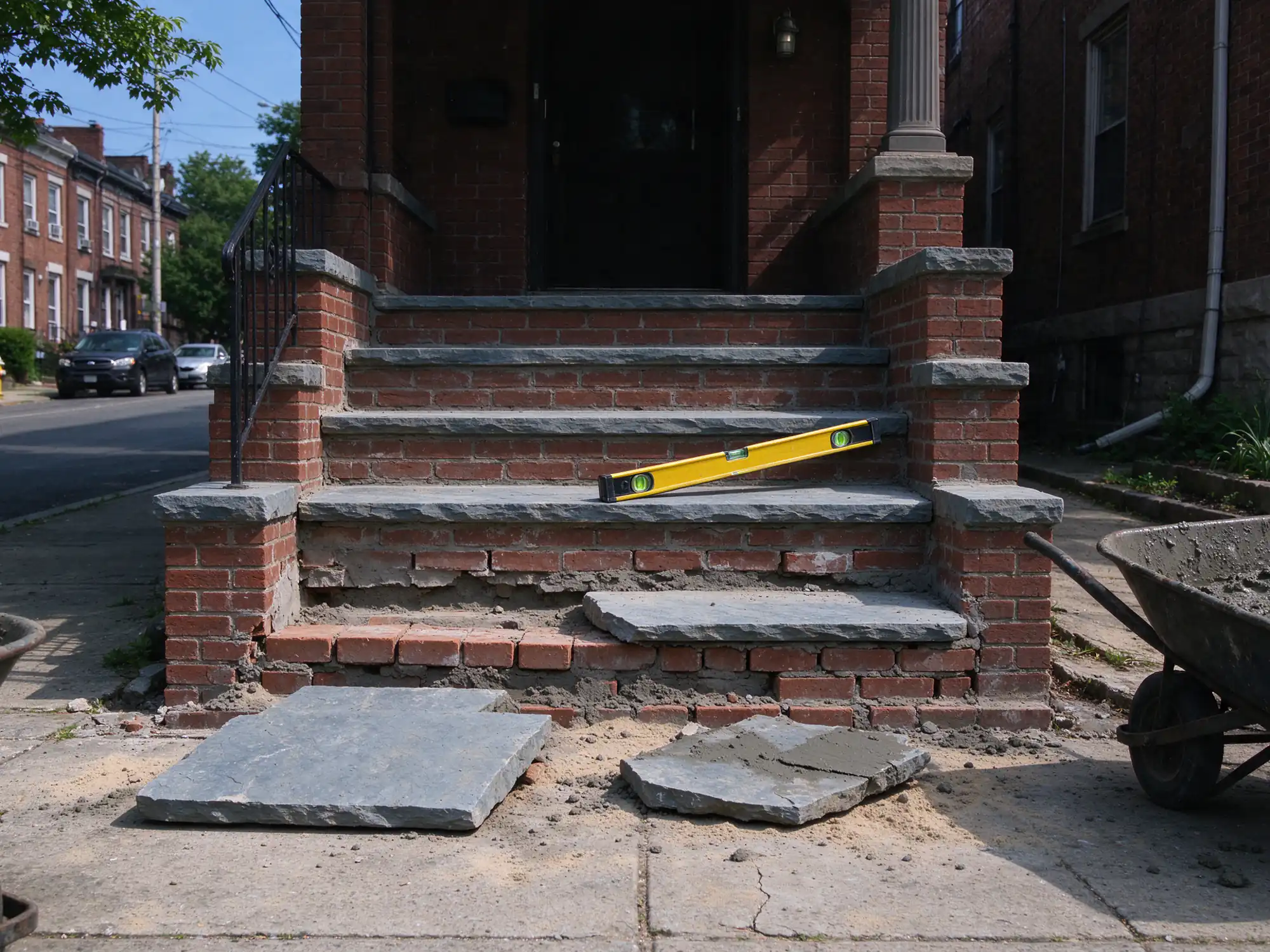 Stoop Repair
Brick, stone and brownstone stoops and steps repaired or rebuilt, from loose treads to settled landings.
A filled crack or a new brick looks finished on day one. If the lintel above it is rusting or the joint above it is open, the same spot fails again. Every job starts by asking why the masonry failed.
Older Newark brick and brownstone is softer than a modern cement mortar. The joint should be the part that wears, not the brick, so the mix is chosen for the wall instead of reaching for the strongest bag on the shelf.
Homeowners report masons who never call back about a few bricks or one set of steps. True Course Masonry Newark takes jobs of every size, and the small ones get the same care.
Typical cost ranges for the common jobs are published on this site with their sources and dates, so a quote is something you can judge rather than guess at.
Describe what you see and where. Photos of the wall, chimney or stoop help decide what needs a closer look.
The wall type, the joints, the brick faces, cracks and what is happening around openings, copings and the roof line, plus how the work will be reached.
Surfaces protected, failed material removed to sound limits, the repair done with matched materials, and the work kept out of rain and freezing while it cures.
A look at the finished work together, with clean-up done and anything found along the way explained.
Loose brick, open joints or a chimney you are not sure about?
Budgeting ranges from published cost sources, checked October 2026. They are not quotes and not our rates; the wall in front of you decides the price.
$3 to $20 per sq ft
Cutting out and replacing failed mortar on walls reachable without scaffolding. Taller walls run higher, around $25 per sq ft or more.
What moves it: Joint depth, how hard the old mortar is, color matching, height and access.
Source: National cost guides (HomeGuide, 2026)
Full cost guide$211 to $276 for one brick
Removing and replacing a single damaged brick, including matching mortar. About ten bricks runs roughly $532 to $663.
What moves it: How well the brick matches, how many are scattered across the wall, height, and what is behind the brick.
Source: Homewyse cost calculator, ZIP 07102, January 2026
Full cost guide$500 to $2,500 per chimney
Repointing the mortar joints of a typical chimney stack above the roof.
What moves it: Chimney height and width, roof pitch and access, crown condition, and how many bricks also need replacing.
Source: National cost guides (HomeGuide, 2026)
Full cost guideUse the masonry cost estimator to get a range for your own job without a phone call.
Start with what you are seeing and your ZIP code. Photos help, and you can describe them in the message.
Call(973) 313-5921| Pointing | Brick replacement | Partial rebuild | |
|---|---|---|---|
| What it fixes | Open, soft or washed-out mortar joints | Individual blown, cracked or loose bricks | A section that has bulged, shifted or lost its bond |
| Fits when | The bricks are sound and the wall is still straight | Damage is scattered or limited to a few bricks | Bricks are displaced, ties or lintels need to be reached, or the wall is out of plane |
| Will not fix | Movement, a rusted lintel or bad flashing | A wall that is still moving or wet from behind | A cause that is never found, such as roof water or settlement |
| Moves the price | Area, joint depth, height, mortar match | Brick match, count, height | Size, shoring, matching, permits, engineering if needed |
Housing age and building form change what a street needs from a mason. Shares from the U.S. Census American Community Survey, 2020-2024.
| Town | Homes built before 1940 | Housing |
|---|---|---|
| Newark | 23.7% | 41% of homes in 2-4 unit buildings |
| East Orange | 32.1% | 49% in buildings of 5+ units |
| Bloomfield | 37.7% | 41% single-family detached |
| Belleville | 32.4% | 61% built before 1960 |
| Montclair | 59.4% | 74% built before 1960 |
| Irvington | 24.4% | 39% in 2-4 unit buildings |
| Glen Ridge | 81.1% | 86% built before 1960 |
| Maplewood | 55.5% | 71% built before 1960 |
| Orange | 28.0% | 50% in buildings of 5+ units |
For most homeowners, yes. Pointing, repointing and tuckpointing all describe cutting out failed mortar and packing new mortar into the joints. Strictly, tuckpointing is an older decorative finish with a thin contrasting line, but around Newark people use the words interchangeably. What matters is that the old mortar is removed to sound material, not smeared over.
Scrape a joint with a key. If mortar crumbles out easily, if joints sit a quarter inch or more behind the brick face, or if you find sand on sills and steps, the joints are failing. Cracks through the bricks or walls out of plumb are a different problem and need a closer look first.
Spalling usually means the brick stayed wet long enough to freeze, salts crystallized under the surface, or a hard cement mortar forced water into the brick instead of the joint. Newark sees about 80 freezing nights a year, so wet brick gets many chances to fail. Replacing the brick without stopping the water usually means it happens again.
Yes. True Course Masonry Newark takes jobs of every size, including a few loose bricks, one cracked step or a short run of failed joints. Small repairs done early are often what keeps a larger repair from being needed later.
It depends on the work. New Jersey requires a construction permit for repairs unless the code lists them as ordinary maintenance, and a chimney rebuild or a wall rebuild needs one. Like-for-like stoop repairs are listed as maintenance. In Newark's historic districts, street-facing work can also need historic commission approval before it starts.
Usually closely, rarely perfectly on day one. Mortar is matched for color, sand texture and joint profile, often with a small test area first. Replacement brick is matched for size, color, texture and hardness, sometimes from salvaged stock. New work also weathers in over time, so a fresh repair can look brighter for the first season.
Only if the joints are where the water gets in. Water also enters through cracked copings, chimney crowns, failed flashing, open windowsills and roof edges. A sealer on the brick face rarely fixes a leak and can trap moisture in older masonry, so the water path is traced before anyone recommends a fix.
Not necessarily. Stair-step cracks follow the mortar joints and can come from settlement, but also from thermal and moisture movement, a rusting lintel or a missing movement joint. Width, whether the crack is growing, and whether the wall has moved out of line tell you more than the pattern does. A crack that is widening calls for an engineer.
Small brick replacements start around $211 to $276 for a single brick in the 07102 ZIP code, and pointing runs about $3 to $20 per square foot on walls reachable without scaffolding, by published cost guides. Height, access, matching and what is found behind the brick move the price, which is why the estimate tool asks about them.
Some can. Fresh mortar must not freeze while it cures, so the Brick Industry Association calls for cold-weather protection once air temperatures fall below 40 degrees Fahrenheit. Small repairs, interior work and protected areas often go ahead, while large pointing jobs are usually planned for spring through fall.
Keep every course true.
True Course Masonry Newark serves Newark and Essex County, NJ. Tell us about the wall, the chimney or the stoop, and the next step is a conversation, not a sales pitch.