
True Course Masonry Newark repairs brick walls, stoops and the masonry near grade on houses in Newark’s East Ward. Two local facts shape almost every job for a masonry contractor in the Ironbound, Newark: low ground that has taken brackish floodwater, and houses built so close together that reaching a side wall is half the work. The work is fulfilled by licensed and insured contractors, and small repairs are welcome, from one stoop tread to a damaged wall base.
Repair the visible damage now, or find the salt source first?
Find the source first where the damage sits low on the wall. Brick that is losing its face within a few feet of the ground, with white deposits on it, is showing salts moving with moisture; replacing those bricks without knowing whether the water comes from flooding, the ground or the pavement can mean the new units fail the same way. The guide to efflorescence explains what the deposits mean, and the guide to why brick spalls covers face loss.
Brick repair replaces damaged units once the cause is understood, and brick pointing renews joints with a mortar chosen to suit the existing brick rather than the hardest mix available. Where the house is frame and sided above a brick or block base, the masonry work is that base, the stoop and any chimney. General masonry repair covers what falls between. Structural foundation repair and basement waterproofing are not offered.
What the Ironbound’s ground does to masonry
The Newark Public Library describes the east of the city as former marshland, with the Down Neck area once farmed for salt-marsh hay. After Superstorm Sandy in October 2012, Rutgers reporting described Ironbound homes soaked in brackish Passaic River water up to first-floor windows, with sewers backed up, and New Jersey Monitor reporting from 2024 describes Ironbound streets flooding when heavy rain meets high tide on the Passaic. Floodwater that carries salt into porous brick and mortar leaves it behind as the wall dries, and where those salts crystallize inside the brick rather than on its surface, the face can break away. A U.S. Army Corps of Engineers and NJDEP coastal storm project for the Ironbound has been agreed, but no masonry decision should wait on its timing.
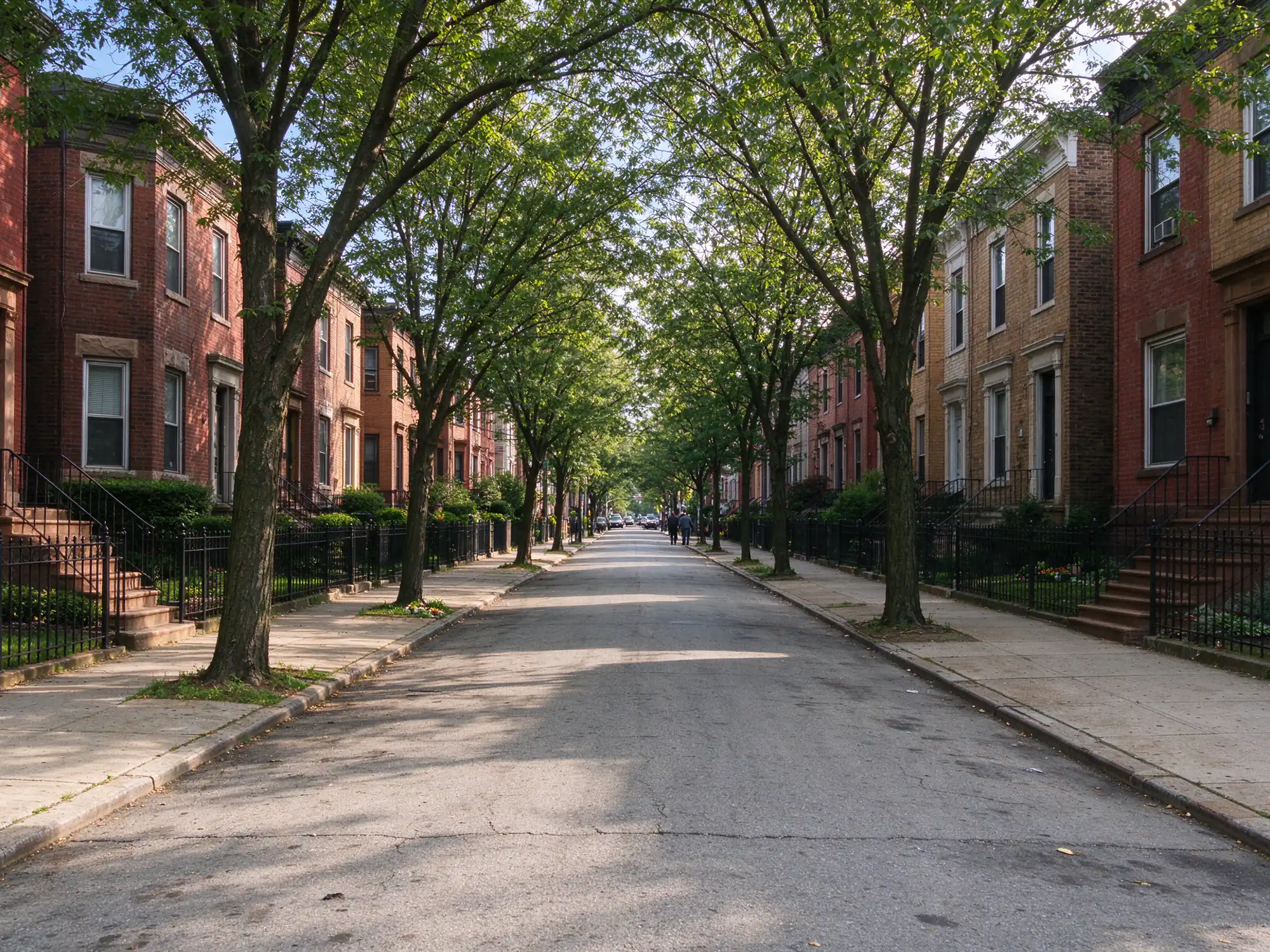
Access is the second factor. A Lafayette College museum exhibit describes Ironbound homes as typically very close together, with about 60% of buildings two- and three-family homes. Where a side wall faces a passage a few feet wide, scaffolding, debris protection and the neighbor’s consent are planned before a start date, and a first look records the access for each wall along with joint depth, brick condition, earlier repairs and movement clues.
Permits in the East Ward
Ironbound work is permitted through the Newark construction office. N.J.A.C. 5:23-2.14 requires a permit to repair or reconstruct a structure unless an exception applies, and the state ordinary-maintenance list names no repointing item. Newark’s historic code maps include an Ironbound section, so whether a given address falls under Landmarks and Historic Preservation Commission review is checked as well. The guide to masonry permits in Newark covers the steps. Owners farther north can see Forest Hill.