
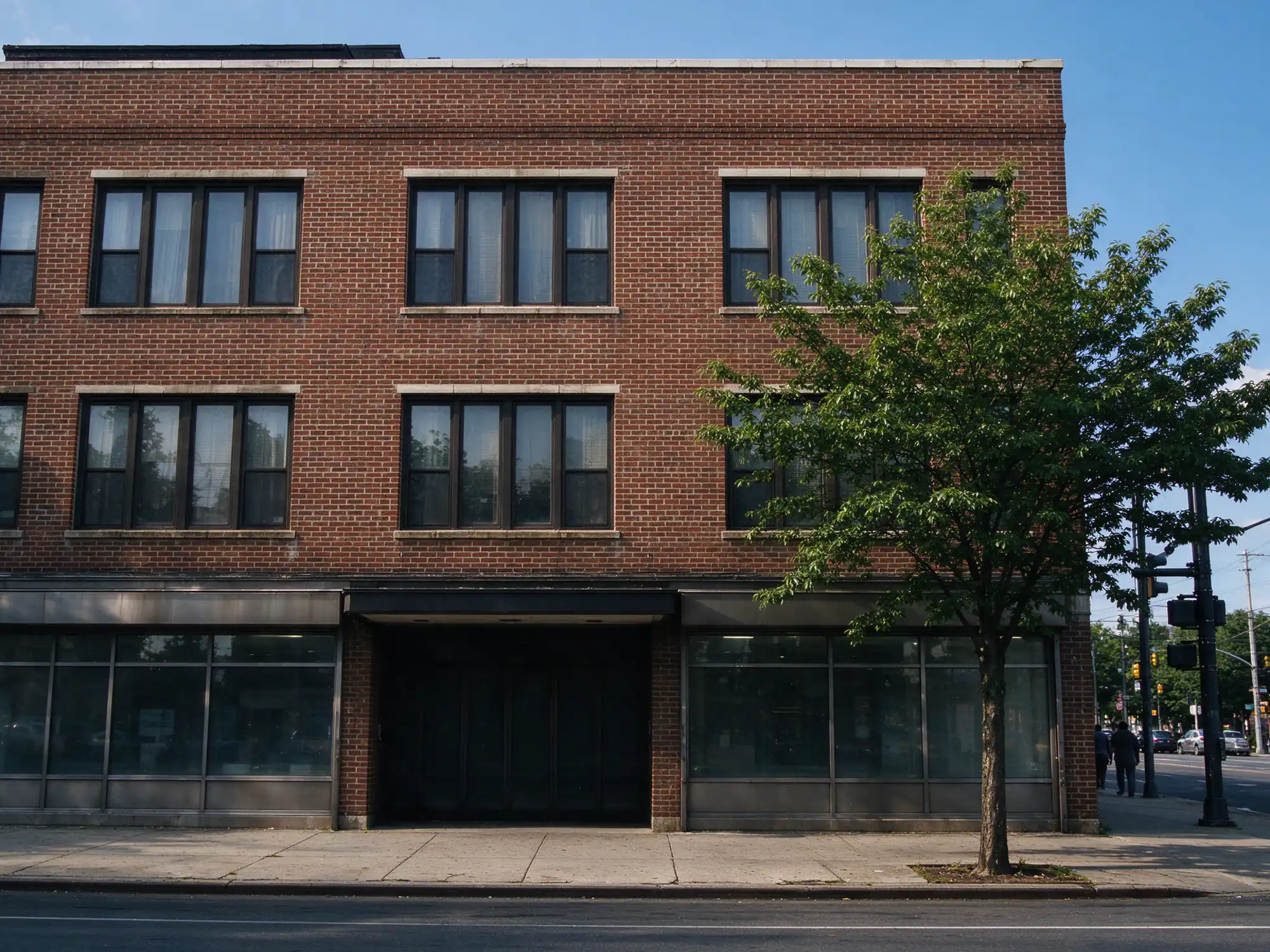
True Course Masonry Newark repairs parapets, lintels, facades and storefront masonry on walk-up apartment buildings and mixed-use frontages in the City of Orange. Owners of these buildings rarely ask a masonry contractor in Orange, NJ whether work is needed; the list is usually long. The real question is sequence, when the full list costs more than one year’s budget. The work is fulfilled by licensed and insured contractors, and the business takes jobs of every size, from one lintel to a full parapet program.
Which repair comes first on an Orange walk-up?
Work that protects people goes first, then work that stops water entering the top of the wall, then openings, then the main wall joints, and appearance last. That order follows the way masonry fails: water that gets in at a coping travels down, so repointing a lower wall before closing the top spends money on joints that the next wet season will soak again.
| Priority | What it covers | Why it sits here |
|---|---|---|
| 1. Falling hazard | Loose brick, displaced coping, cracked units over an entrance or sidewalk | A piece dropping onto a walkway is a safety problem, not a maintenance one |
| 2. Water at the top | Parapet joints, coping joints, flashing at the roof edge | Water entering here moves down and feeds damage on every floor below |
| 3. Openings | Lintels and arches over windows and the storefront | A rusting steel lintel can crack brick above it; patching the crack first hides the cause |
| 4. Main wall joints | Repointing street and rear elevations | Lasts longer once water from above is controlled |
| 5. Appearance | Cleaning, color matching, minor cosmetic units | Worth doing once the wall is sound |
The order bends where findings differ. A wall with a bulge or displaced section may need an engineer before any of this, and the guide to when a crack needs an engineer sets out the signs.
Services matched to that sequence
Parapet repair addresses the most exposed masonry on a flat-roofed walk-up: copings, open joints and brick at the top of the wall, assessed together with the roof flashing they meet.
Lintel replacement handles steel angles and supports over windows and shop openings. Where a storefront sits under apartments, the opening is often the widest on the building, so its support carries more brick than any window above.
Commercial masonry repair covers mixed-use frontages where the shop level, sidewalk protection and occupied floors all shape the plan. At street level, brick near the sidewalk takes splash from shoveled and treated pavement, and old sign brackets or awning fixings drilled into joints can let water in, so the shop level gets its own line in the scope.
Brick pointing and brick repair follow once the top of the wall and the openings are dealt with. The guide to when to repoint brick explains how to read joint condition, and general masonry repair covers what falls between categories.
How a sequenced Orange program runs
A first look checks the wall type where it can be seen, joint depth, brick condition, earlier repairs, water sources, movement clues and access. On a walk-up it also records findings by elevation and by priority, so the written scope can be split into phases with each phase named by area and access method.
Permits run through the City of Orange Township’s own construction office. N.J.A.C. 5:23-2.14 requires a permit to repair or reconstruct a structure unless an exception applies, and New Jersey’s 2024 code editions took effect on August 17, 2026, with a reported grace period. Where facade work may threaten the public sidewalk, N.J.A.C. 5:23-2.34 calls for bridging designed by a design professional, released, and then inspected and signed off by that professional before that work begins. Orange’s own sidewalk and container rules were not researched for this page and are checked with the city.
Why sequencing carries extra weight in Orange
The building stock sets it up. U.S. Census Bureau American Community Survey figures for 2020 to 2024 put 50.1% of Orange’s 12,883 housing units in buildings of five or more units, and 52.5% were built before 1960. The ACS records no wall material, so those numbers do not say how many walk-ups are brick. Where one is, its owner holds a long list of exposed masonry under one roof, and a phased plan fits that list better than a single mobilization.
Water from the top is the mechanism that rewards the right order. NOAA’s 1991 to 2020 normals for Newark Liberty Airport, the nearest long-term station, record 46.60 inches of precipitation a year and 76.3 days with at least a tenth of an inch. A parapet takes that rain on both faces and its top, and a coating does not stand in for closing open joints; the guide to sealing brick explains why sealers can trap moisture in older masonry.
Spending is real but undifferentiated. The NJ Department of Community Affairs Construction Reporter shows about $17.7 million in residential additions and alterations authorized by Orange permits in 2024. That data has no work-description field, so it says nothing about masonry in particular, only that Orange owners are actively permitting alterations.
Why this approach suits Orange owners
Scopes are written in ranked phases from what the first look finds, so an owner can fund the top of the wall this year and the main elevations later without the early work being undone. Small repairs are taken as readily as large ones. The Newark masonry repair cost guide breaks down what drives each line. Owners with buildings nearby can see the East Orange and Montclair pages.