Last Updated:
A chimney is the most exposed piece of masonry on a house. It stands above the roof with all four faces and its top open to rain, wind and frost, and nothing shelters it the way eaves shelter a wall. Chimney repair in Newark, NJ, as this page uses the term, means the masonry: repointing the stack, replacing spalled or loose brick, rebuilding or replacing the crown, and repairing the sloped shoulders where a wide chimney steps in. True Course Masonry Newark repairs chimney masonry on houses and small buildings across Newark and Essex County, and the work is carried out by licensed and insured contractors. Jobs of every size are taken, including a few loose courses at the top of one stack.
What this service does not include matters just as much. Chimney sweeping, flue liners, caps attached to the flue, and combustion or fire-safety inspections are a different trade, and they are not offered here. If your question is whether the flue is safe to use, you need a chimney sweep or chimney inspector, and a masonry visit is not a substitute for that inspection.
What happens on the first visit
The first look is about working out which part of the chimney is failing and why, because a stained ceiling beside a chimney can come from three different places. Most of it can be seen from the ground, a window or a ladder at the eave; climbing onto the roof is part of the job, not something to try yourself. The visit checks:
- The joints. Whether mortar is recessed at the surface or soft deep into the joint, and whether the worst erosion sits on the side facing the weather or near the top.
- The brick. Faces popping off, cracked units, and bricks that have shifted out of line. Why brick spalls explains the freeze and salt mechanism behind face loss.
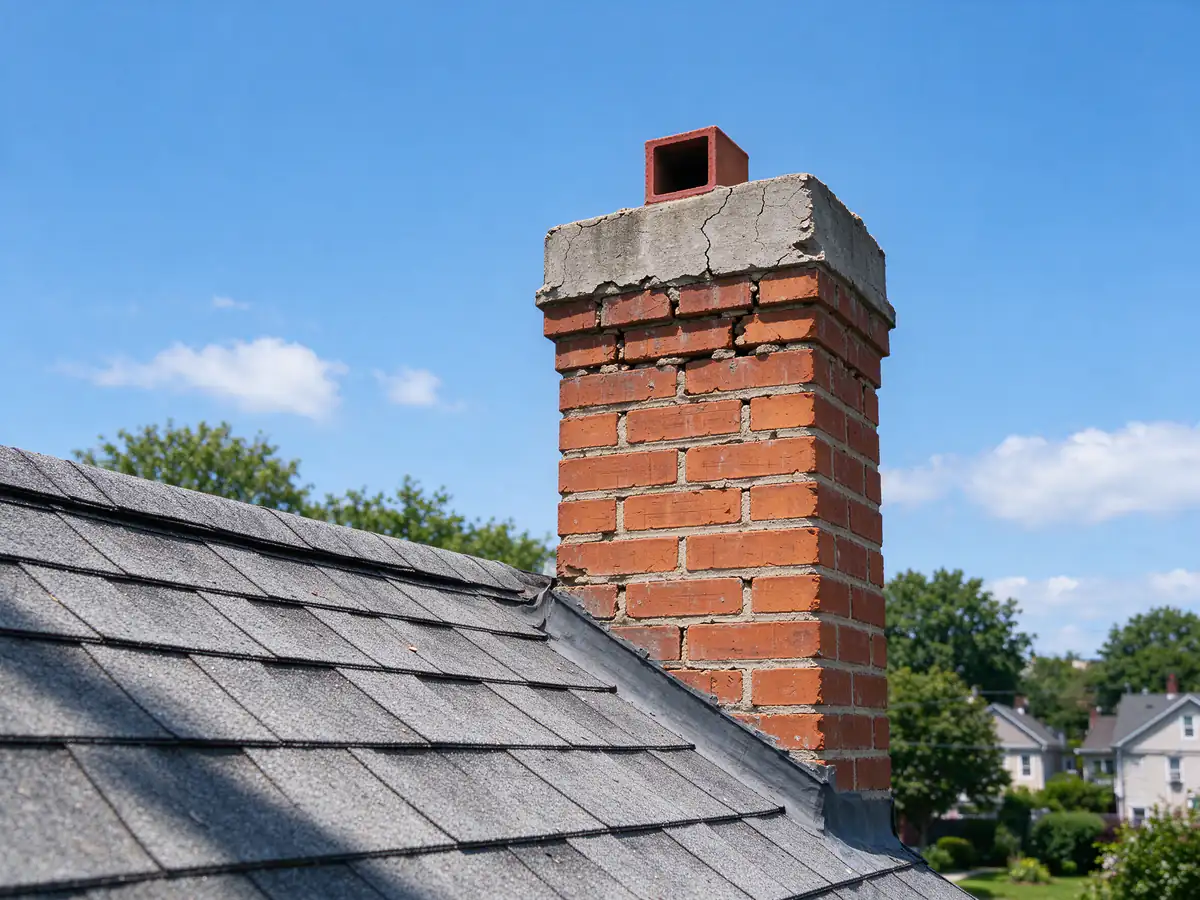
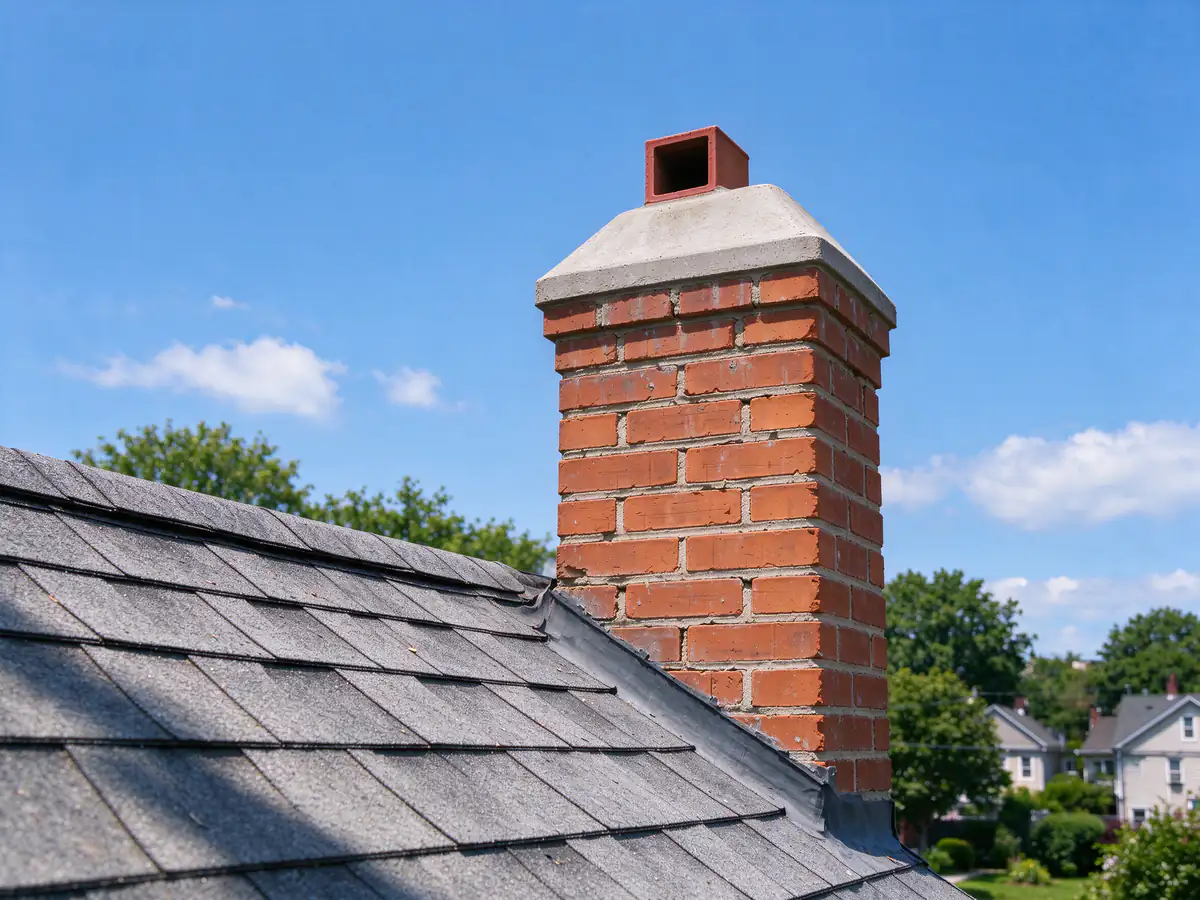
- The crown and shoulders. Cracks, a flat top that holds water, missing overhang, and open joints on the sloped shoulders lower down.
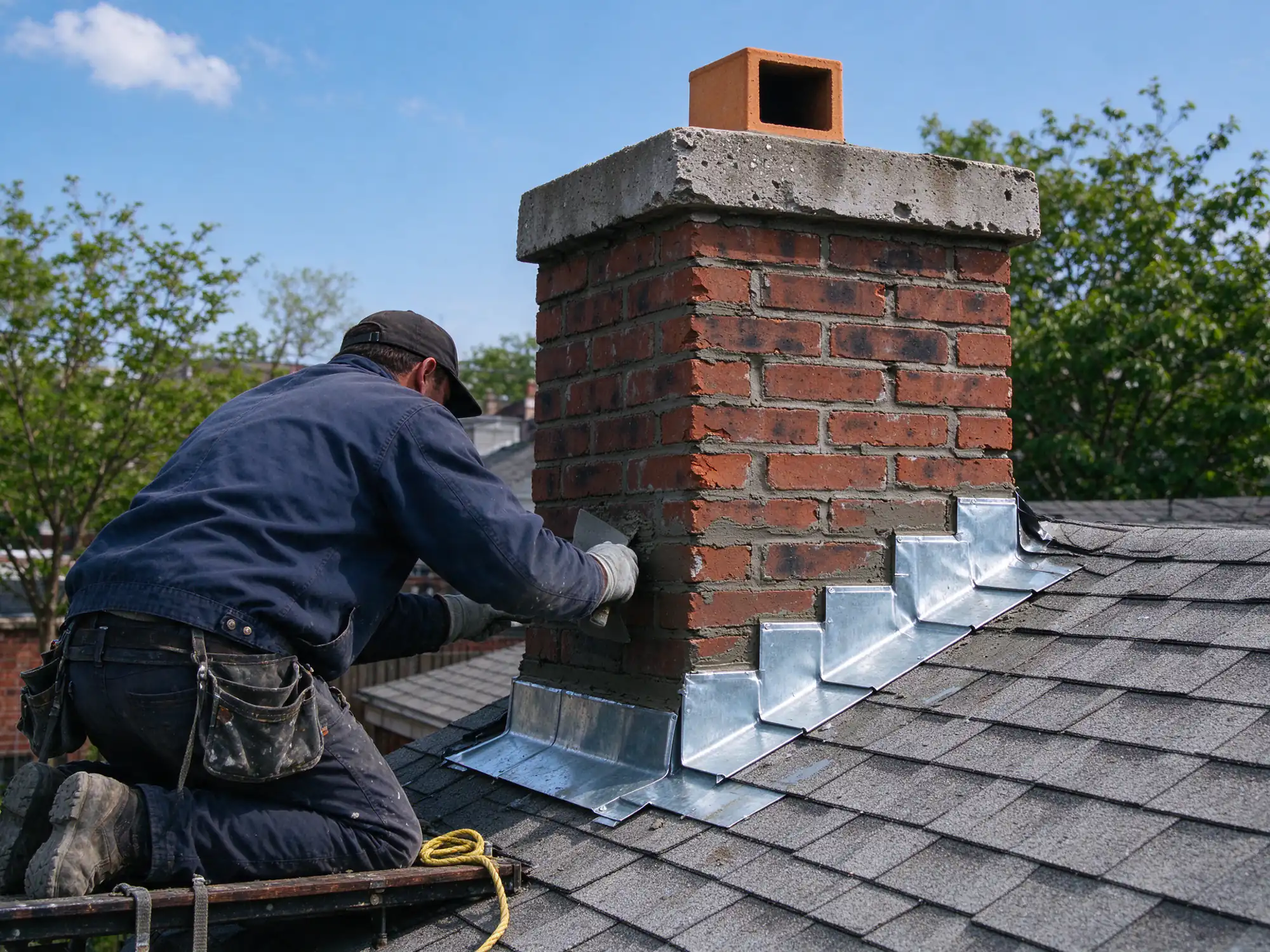
- The roof interface. The joint lines where counterflashing is let into the brick, and whether the flashing below looks disturbed or patched with sealant.
- Plumb and movement. Whether the stack leans, twists or has a crack that runs through brick rather than along joints.
- Earlier repairs. Hard gray cement smeared over old joints, or a parged crown that has already cracked.
- Access. Roof pitch and covering, the stack’s height above the roof, and how close the neighboring house stands.
Masonry, flashing or flue: finding where the water gets in
Water that shows up around a chimney inside the house has three common entry routes, and only one of them is fully masonry work.
Through the masonry. Brick is not waterproof. Open joints and spalled faces let rain soak into the stack, and a cracked crown lets water straight into the core of the chimney. NOAA’s 1991 to 2020 climate normals for Newark Liberty International Airport show about 46.6 inches of precipitation a year, with 76 days bringing a tenth of an inch or more, so a stack with open joints gets wet often. Masonry leaks tend to show as damp brick in the attic, efflorescence on the chimney breast, or staining that lingers for days after rain. White salt bloom is a sign that water is moving through the masonry, not proof the chimney is failing; the guide on efflorescence on brick explains why.
At the flashing. Where the chimney passes through the roof, metal step flashing and counterflashing close the gap. Counterflashing is usually let into a mortar joint in the brick. The joint that holds it is masonry; the metal and the roofing beneath it are roofing work. Flashing leaks tend to show at the ceiling right next to the chimney and track with wind-driven storms. A written scope should say who handles each piece, and repointing the stack will not stop a flashing leak. The guide to chimney leaks: masonry or flashing sets out the clues side by side.
Down the flue. Rain entering an open flue, or condensation from an appliance venting into the chimney, is a flue issue. That belongs to a chimney sweep or inspector, not a mason.
Sealing the outside of a chimney is often suggested as a fix. A breathable water repellent can have a place on sound brick after the joints, crown and flashing are dealt with, but sealing does not stop leaks from open joints or failed flashing, and an impermeable coating can hold water inside the brick. See should you seal brick before anyone coats the stack.
Crowns, caps and shoulders
The crown is the slab across the top of the chimney, around the flue. Its job is to throw water clear of the brick faces below. A crown that works is sloped away from the flue and projects past the brick with a drip edge, so water falls off rather than running down the face. Many crowns were built as a thin, flat layer of mortar finished over the top course. Those crack, hold water and let it into the stack, and then each freeze widens the cracks. NOAA’s normals count about 80 nights a year at or below freezing at Newark, and about 65 of those days warm above freezing in the afternoon; that is a rough proxy for freeze-thaw days, not a measured cycle count, but a wet crown sees a lot of them.
The word cap gets used for two things. A masonry cap or crown is part of the chimney and is in scope. A metal cap or rain cover fixed to the flue is flue equipment, and it is not offered here. The guide to chimney crown cracks covers when a crack can be repaired and when the crown needs replacing.
Shoulders are the sloped masonry where a wide chimney base narrows to the stack. Their mortar faces the sky, so it erodes faster than vertical joints, and a shoulder with open joints can feed water into the wall of the house beside it.
Loose brick, leaning stacks and when repair is not enough
A chimney with loose brick at the top is a falling hazard. Bricks that work free can drop onto a roof, a walkway or a neighbor’s yard. If you can see displaced brick, keep people and cars out from under the chimney and away from the drip line, and never climb onto the roof to push, pull or test the brick yourself.
A stack that leans, or has brick moving out of line, is a different problem from worn joints. The cause may be saturated, weakened mortar near the top, a deteriorated crown letting water in, or settlement lower down. Repointing a leaning stack fills the joints but does not straighten it or tie loose units back together, so it hides the problem rather than fixing it. When displaced or crumbling brick runs through several courses, the realistic choice is often chimney rebuilding above the roofline. The guide on whether to rebuild or repoint a chimney walks through the signs, and the masonry damage assessment can help you describe what you see before anyone visits. Where a chimney appears to be settling with the house, a structural engineer may need to look at it before the masonry is priced.
Where the stack is sound and plumb but joints are eroded, repointing is the right repair. Joints are cut back to sound mortar and refilled in layers with a mortar suited to the brick, as described on the brick pointing service page. Older chimneys may have been laid in a lime-rich mortar, and a hard cement repointing mix can push water and salts out through the brick faces instead; the guide to lime mortar vs portland cement explains how a mix is chosen. Individual spalled bricks are cut out and replaced as part of brick repair.
Permits, historic districts and roof access
New Jersey’s Uniform Construction Code, N.J.A.C. 5:23-2.14, requires a permit before a structure is repaired, altered or reconstructed, with exceptions for ordinary maintenance, minor work and emergency work. The ordinary maintenance list in N.J.A.C. 5:23-2.7 does not name repointing and excludes work affecting structural or fire safety. Whether a given chimney repair needs a permit is a question for the Newark construction office before work starts. A rebuild is treated as reconstruction and needs a permit. Our guide to masonry permits in Newark covers what to ask.
Historic status adds a layer. Under Newark’s Landmarks and Historic Preservation regulations (Chapter 41:10, adopted 2023), work in historic districts and on landmarks can need a Certificate of Appropriateness from the Landmarks and Historic Preservation Commission, or a Certificate of No Effect from the Historic Preservation Officer. A chimney seen from the street in districts such as Forest Hill may fall under that review, and which repairs are exempt has not been confirmed.
Roof access drives much of the work. Steep slate or tile roofs need staging that spreads load and keeps workers off fragile units, and shingle roofs need protection from dropped mortar and brick.
What chimney masonry repair costs in the Newark area
National cost guides give a starting point. HomeGuide’s February 2026 figures put chimney repointing at about $500 to $2,500 for a typical stack, with tall or hard-to-reach chimneys running higher, and Fixr lists a similar range. A full crown replacement typically runs about $1,000 to $3,000 in both HomeGuide and Fixr; repairing small crown cracks costs far less. These are national budgeting ranges for Newark-area projects, not local rates and not a quote. A price for your chimney comes from a site visit and moves with:
- how many joints need cutting out and how deep the damage runs
- how many bricks are loose or spalled and how closely they must be matched
- the stack’s height above the roof and the roof’s pitch and covering
- staging, roof protection and debris handling
- whether the crown is repaired or replaced
- coordination with a roofer on the flashing, or a sweep on the flue
- permits, inspections and any historic review
If an insurer has asked for the work, get their request in writing so the scope answers it, and keep in mind that coverage depends on your policy. The chimney repair cost guide breaks these drivers down, and the masonry cost estimator gives a rough range for your own job. The list below shows what a chimney masonry scope from True Course Masonry Newark covers.
What's included
- A look at the stack's brick, joints, crown, shoulders and the joint lines that hold counterflashing, before any price is given
- A written scope that says what is masonry work, what belongs to a roofer and what needs a chimney sweep or inspector
- Roof protection and safe access planned for the pitch and height of the stack
- Failed mortar removed to sound material with dust control, then repointed in layers
- Damaged or loose brick taken out and reset or replaced with units matched to the stack
- Crown repair or replacement shaped to drain water off the top of the chimney
- Cleanup of mortar and debris from the roof and grounds, with a final look at the finished stack
Three common chimney masonry repairs compared
| Repointing the stack | Crown replacement | Rebuild above the roofline | |
|---|---|---|---|
| What it fixes | Eroded, cracked or sandy mortar joints while the brick stays tight and in line | A cracked, flat or crumbling top slab that lets water into the stack | Loose, displaced or saturated brick in the upper stack that cannot be kept |
| When it fits | The stack is plumb and most brick is sound | Water is entering through the top and the brick below is still sound | Brick moves by hand, the top is leaning, or courses have shifted |
| What it will not fix | A leaning stack, a failed crown or leaking roof flashing | Open joints or spalled brick lower down | Flue or liner problems, which are a separate trade |
| Where to read more | Brick pointing service | Chimney crown cracks guide | Chimney rebuild service |
Related resources
- LearnDoes My Chimney Need Rebuilding or Just Repointing?
- LearnWhat Should I Do About a Cracked Chimney Crown?
- LearnIs My Chimney Leak Coming From the Masonry or the Flashing?
- Cost GuideHow Much Does Chimney Repair Cost in Newark, NJ?
Representative photos of this work
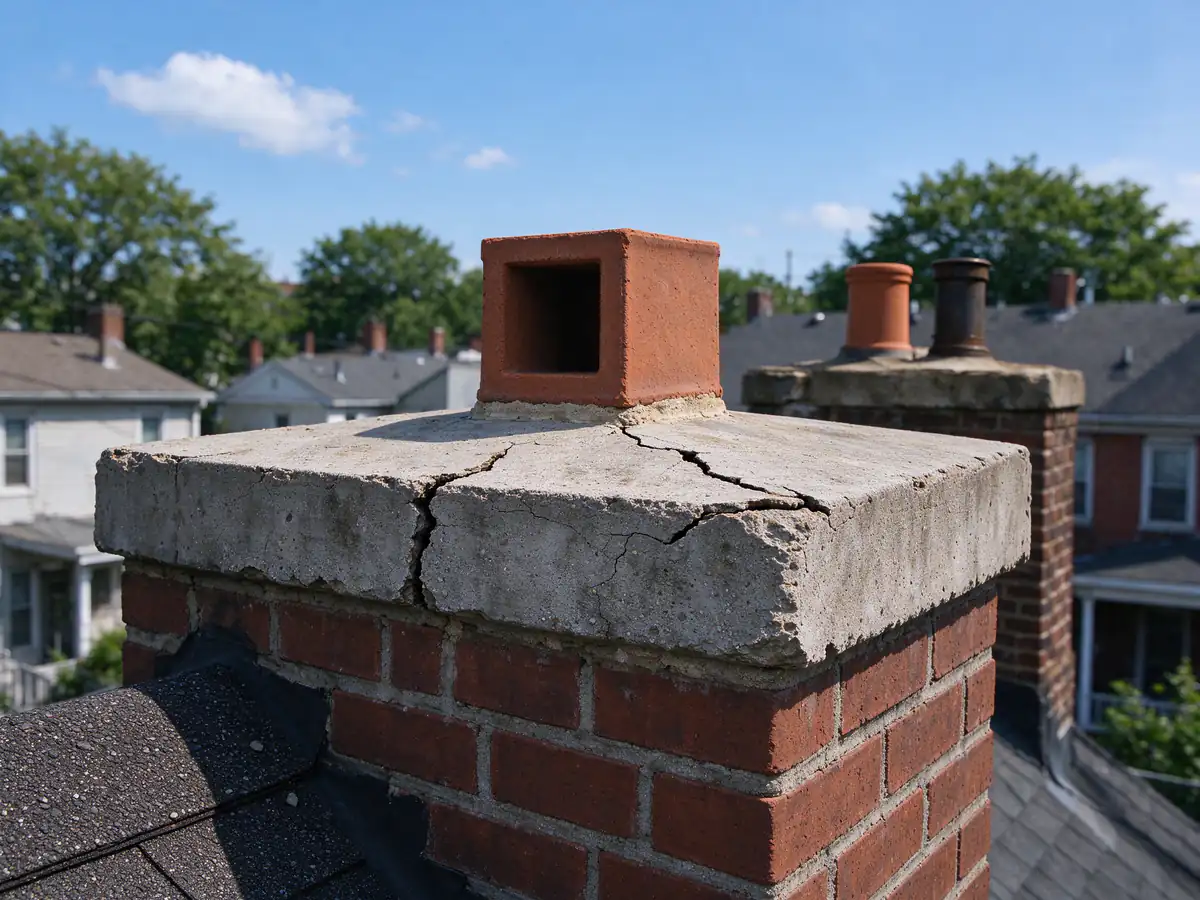
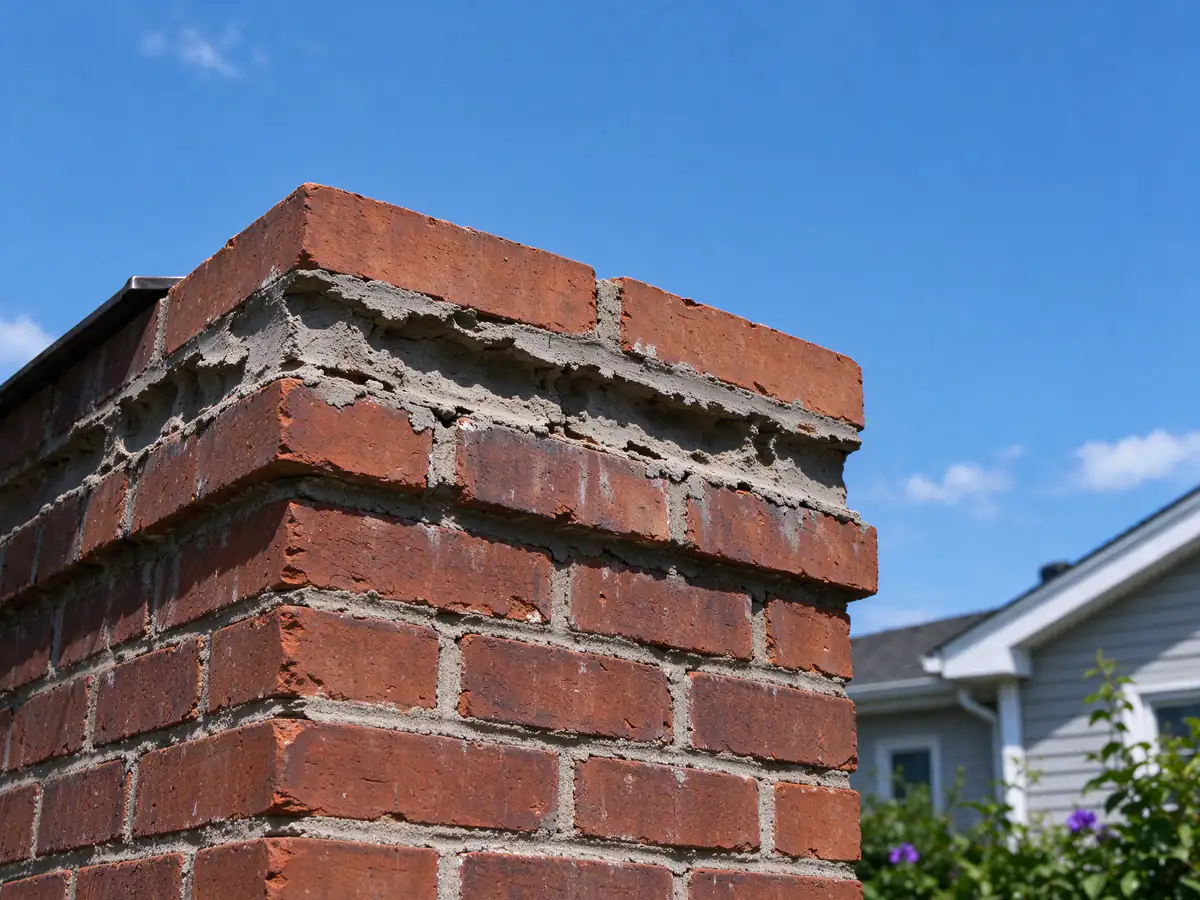
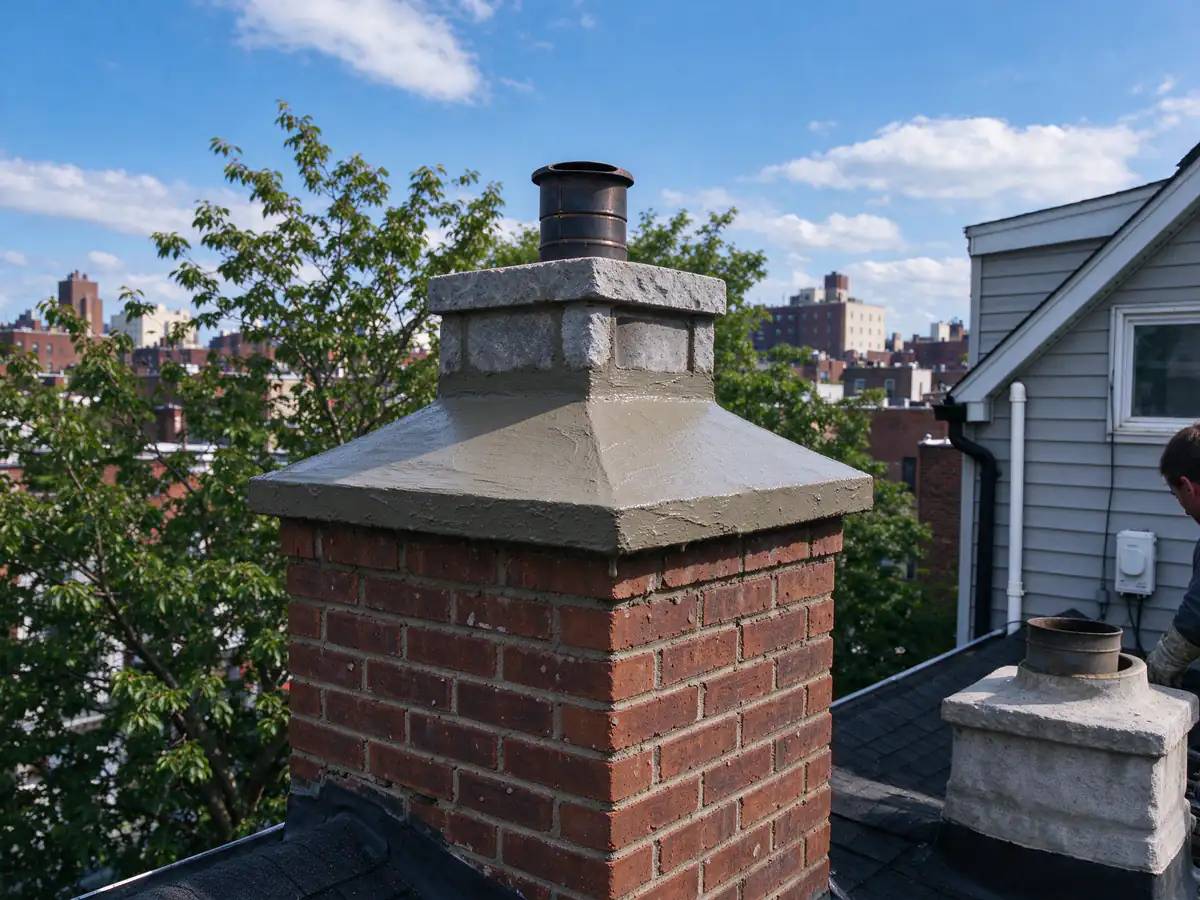
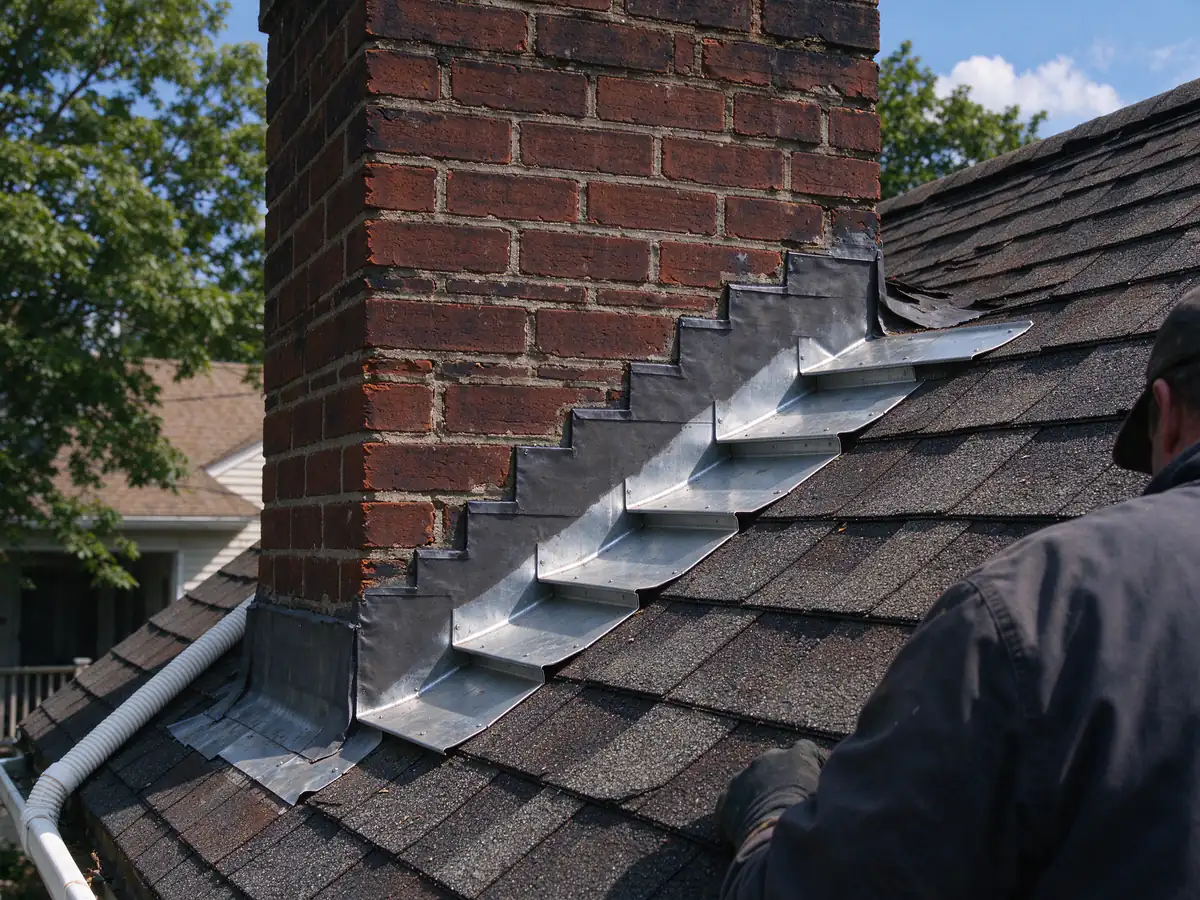
Representative photos of this type of work, not photos of specific completed jobs.
Before and after (representative)